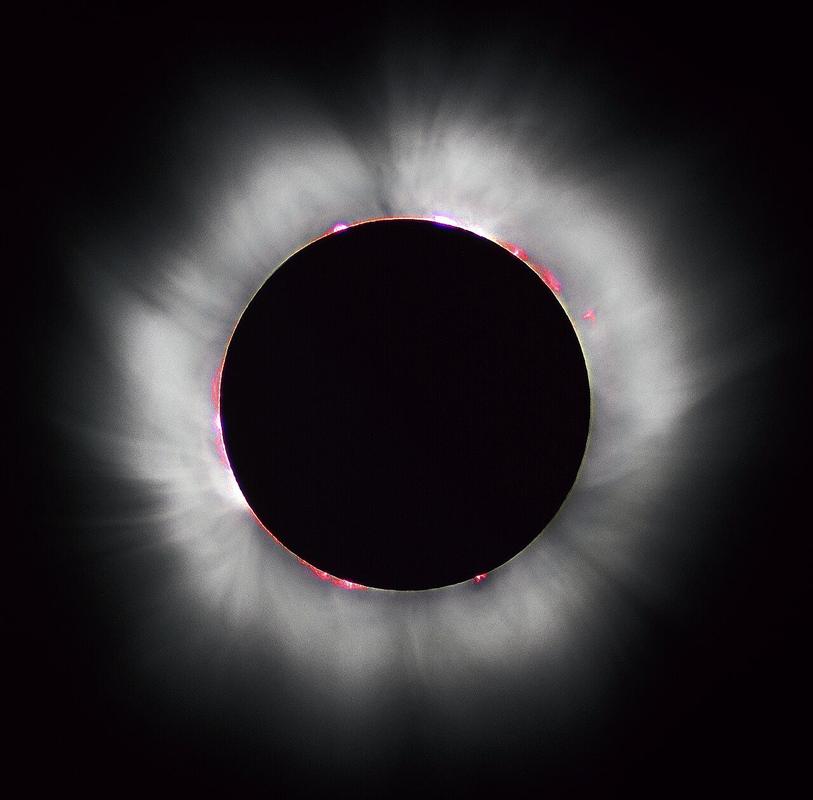
 A shadow geometry, not weather.Wikimedia Commons, CC BY
Why this matters
Snowdonia and Yosemite see the same phase on the same night. Eclipses are pickier. A full Moon over Eryri is geometry, not a promise of Earth’s shadow. A full Moon over Yosemite is the same triangle. Eclipse chasers wait for a node, not for every full. UK school trips still miss most months. US park night walks still miss most months. The skill is to split phase from eclipse. Phases are how much of the sunlit half faces us. Eclipses are alignment plus the 5° lunar-orbit tilt being near zero. Clouds are weather. Time zones are clocks. Neither is the cone. If you cannot say umbra versus penumbra, you cannot say why a total is a tunnel and a partial is a graze. Holderness does not get a private Moon. Miami does not get a different shadow. Same machine, rare hit.
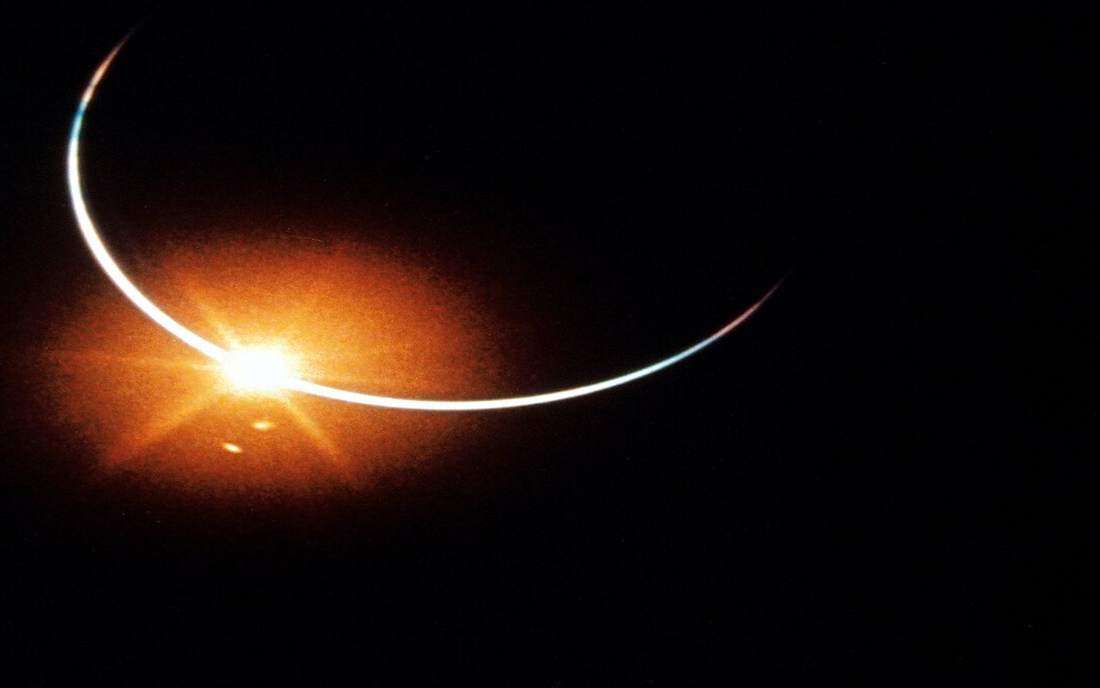 Field photograph or official scientific figure for teaching eclipses. A second photograph for the projector script — not the lab cover. Source: Wikimedia Commons / NASA / USGS / NOAA, public domain or CC.Wikimedia Commons / NASA / USGS / NOAA, public domain or CC
The mechanism
Input is a month on the slider, plus the Eclipse alignment toggle. Sun, Earth, Moon. The Moon runs a ring. Leave alignment off and the ring is tilted about 5° to the ecliptic. What moves: the Moon’s place, the cones if you are looking, whether a new or full sits near a node. What does not: the 5° unless you toggle it to zero, the fact of two cones, the fact that new and full happen every synodic month. What is conserved: half the Moon is always sunlit; umbra is the dark core; penumbra is the pale outer shadow. A solar eclipse needs new Moon plus a node — Moon between Sun and Earth. A lunar eclipse needs full Moon plus a node — Earth between Sun and Moon. The lie the model tells: Moon and Earth are huge beside their true gap; cones are fat enough to read from the back row; the orbit is a tidy hoop. Size is exaggerated on purpose. The tilt is the mechanism. Most months the Moon misses the cone. Every full Moon is not an eclipse. A crescent is not Earth’s shadow — that is a different lab’s trap, and it is still wrong here.
How to drive the model
Play the month. Space toggles play. Arrows nudge time. Speed 1×, 2×, 4×. Toggle Eclipse alignment off for the 5° miss, on once so the cones line up, then off again. L labels. R reset. P projector. No explode, no slice in the bar. Pause at new. Pause at full. Ask why next month fails before you toggle. Rarity is the lesson, not the special effect. The toggle is labelled Eclipse alignment. Off is the real 5°. On is the special-effect month. Use it once, not as the default.
If the model will not spin
If the cones will not spin, keep the sentences. Umbra is the dark core. Penumbra is the partial shadow. The Moon’s orbit is tilted about 5°, so most months miss. New and full happen every month. An eclipse needs a node. Solar: new plus node. Lunar: full plus node. Snowdonia and Yosemite share the phase; they do not share an eclipse every month. Size in the kit is fat on purpose. That is enough for Check on paper. Without the 3D view, a student should still split phase from eclipse and still name the 5° tilt as the miss.
Film
NASA Now: Reasons for the Seasons. NASA. About 8 min. NASA / NASA Goddard on YouTube. Public domain US government work. Educational embed, autoplay off. Autoplay off.
Misconceptions
Every full Moon is an eclipse.
Need a node.
A crescent is Earth’s shadow on the Moon.
A crescent is the Moon’s night side. Earth’s shadow is a lunar eclipse, and it is rare.
The Moon is too small to ever cover the Sun.
Angular size can match. The reason most months miss is the 5° tilt, not a tiny Moon.
Umbra
Dark core of a shadow. A total eclipse sits here.
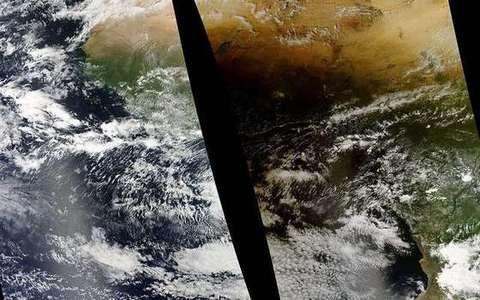 Umbra in the eclipses lab — a TERMS crop, not the glossary plate and not the lab cover. Dark core of a shadow. Source: Wikimedia Commons / NASA / USGS / public domain.Wikimedia Commons / NASA / USGS / public domain
Penumbra
Partial, paler shadow around the umbra. A graze, not the tunnel.
 penumbra in the eclipses lab — a TERMS crop, not the glossary plate and not the lab cover. A TERMS crop, not the glossary plate and not the lab cover. Source: Wikimedia Commons / NASA / USGS / NOAA, public domain or CC.Wikimedia Commons / NASA / USGS / NOAA, public domain or CC
Node
Where the Moon’s tilted orbit crosses the ecliptic. Eclipses need the Moon near a node.
 node in the eclipses lab — a TERMS crop, not the glossary plate and not the lab cover. A TERMS crop, not the glossary plate and not the lab cover. Source: Wikimedia Commons / NASA / USGS / NOAA, public domain or CC.Wikimedia Commons / NASA / USGS / NOAA, public domain or CC
Ecliptic
The plane of Earth’s orbit around the Sun. The Moon’s orbit is tilted about 5° to it.
 ecliptic in the eclipses lab — a TERMS crop, not the glossary plate and not the lab cover. A TERMS crop, not the glossary plate and not the lab cover. Source: Wikimedia Commons / NASA / USGS / NOAA, public domain or CC.Wikimedia Commons / NASA / USGS / NOAA, public domain or CC
Orbital inclination
The Moon’s ~5° tilt to the ecliptic. That is why eclipses are rare.
 orbital inclination in the eclipses lab — a TERMS crop, not the glossary plate and not the lab cover. A TERMS crop, not the glossary plate and not the lab cover. Source: Wikimedia Commons / NASA / USGS / NOAA, public domain or CC.Wikimedia Commons / NASA / USGS / NOAA, public domain or CC
Solar eclipse
New Moon plus a node. Moon between Sun and Earth. Umbra on the ground is a small track.
 solar eclipse in the eclipses lab — a TERMS crop, not the glossary plate and not the lab cover. A TERMS crop, not the glossary plate and not the lab cover. Source: Wikimedia Commons / NASA / USGS / NOAA, public domain or CC.Wikimedia Commons / NASA / USGS / NOAA, public domain or CC
Lunar eclipse
Full Moon plus a node. Earth between Sun and Moon. The Moon rides through Earth’s umbra.
 lunar eclipse in the eclipses lab — a TERMS crop, not the glossary plate and not the lab cover. A TERMS crop, not the glossary plate and not the lab cover. Source: Wikimedia Commons / NASA / USGS / NOAA, public domain or CC.Wikimedia Commons / NASA / USGS / NOAA, public domain or CC
Synodic month
New to new, about 29.5 days. Phase clock. Not the eclipse clock.
 synodic month in the eclipses lab — a TERMS crop, not the glossary plate and not the lab cover. A TERMS crop, not the glossary plate and not the lab cover. Source: Wikimedia Commons / NASA / USGS / NOAA, public domain or CC.Wikimedia Commons / NASA / USGS / NOAA, public domain or CC