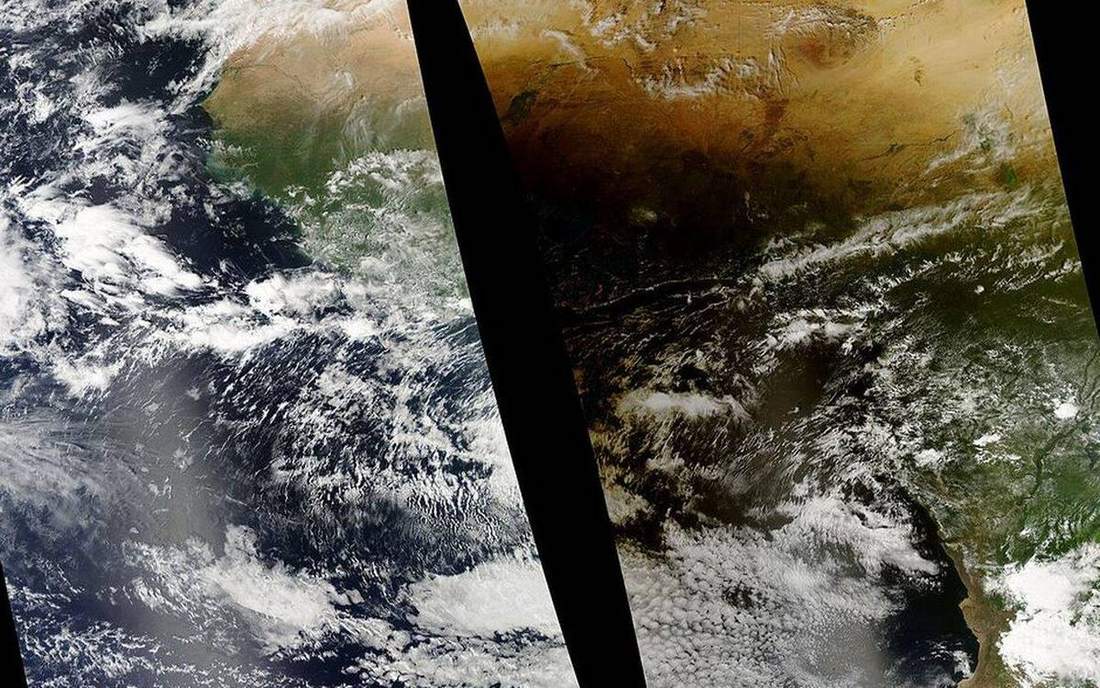
 A landslide scar and a hummocky toe. Downslope movement of rock or soil under gravity. Source: Wikimedia Commons / NASA / USGS / NOAA, public domain or CC.Wikimedia Commons / NASA / USGS / NOAA, public domain or CC
Why this matters
Holderness loses metres of till each year. Waves undercut, but the cliff also fails on its own after rain: a rotational slump, crown dropping, toe shoving the beach. Palos Verdes, California, is the US pair — weak coastal sediment, water in the pores, a curved shear. AQA coasts and NGSS mass wasting both want this as a process you can turn, not a photograph of a scar. If a class only blames the North Sea, they will miss the wet week that actually dropped the block.
 A second photograph for the projector script — not the lab cover.Wikimedia Commons / NASA / USGS
The mechanism
Input is water in the pores. Till is glacial sediment: strong when dry-ish, weak when saturated. Effective strength falls as pore pressure rises. Failure finds a curved surface. The head drops and tilts back; the toe shoves out. That is a slump, not a rockfall and not a flow. What moves: the block, rotating about a hinge. What does not: the idea of a shear surface. What is conserved: mass of the failed slice, until waves pick the toe apart. The lie the model tells: one clean spoon-shaped cut, sped up from days to a slider. Real Holderness is many slices, many wet weeks. Vertical exaggeration so the back row can see the rotation. Waves in the coasts lab remove debris. This lab is the failure itself.
How to drive the model
Leave rain low. Name crown, scar, shear, toe. Raise pore pressure. Watch the block rotate — do not skip to the beach. Keyboard: Space play, arrows, L labels, R reset, P projector. The rain slider is the plot. Ask what the third row thinks makes the cliff fall before you move it.
If the model will not spin
Without the canvas: a rotational slump rides a curved shear. Rain raises pore pressure and the till fails. Crown drops, toe shoves. Holderness till; Palos Verdes coastal slides. Waves remove the toe later. Rockfall is a different machine: free fall of jointed rock. This lab is the spoon scoop. That is enough for Check.
Film
How Does the Earth Create Different Landforms? Crash Course Geography #19. Crash Course Geography. About 13 min. Crash Course / Complexly on YouTube. Standard YouTube licence. Educational embed, autoplay off. Autoplay off.
Misconceptions
The sea ate the whole cliff in one bite.
Waves remove debris. Failure often starts as a wet slump on a curved shear.
Landslides are just fast rockfalls.
A slump rotates. A flow mixes. A fall is free. Name the machine.
Dry cliffs are the dangerous ones.
Pore water is the usual trigger in till. Rain first, then the drop.
Rotational slump
A slice of slope that rotates on a curved shear. Crown drops; toe shoves.
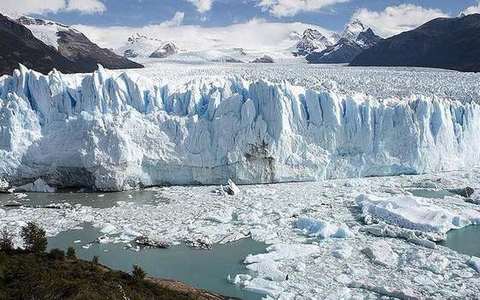 rotational slump in the mass-movement lab — a TERMS crop, not the glossary plate and not the lab cover. A TERMS crop, not the glossary plate and not the lab cover. Source: Wikimedia Commons / NASA / USGS / NOAA, public domain or CC.Wikimedia Commons / NASA / USGS / NOAA, public domain or CC
Shear surface
The failure plane. Curved in a slump. Not a vertical cliff face.
 shear surface in the mass-movement lab — a TERMS crop, not the glossary plate and not the lab cover. A TERMS crop, not the glossary plate and not the lab cover. Source: Wikimedia Commons / NASA / USGS / NOAA, public domain or CC.Wikimedia Commons / NASA / USGS / NOAA, public domain or CC
Crown
The upslope crack and head of the failed block.
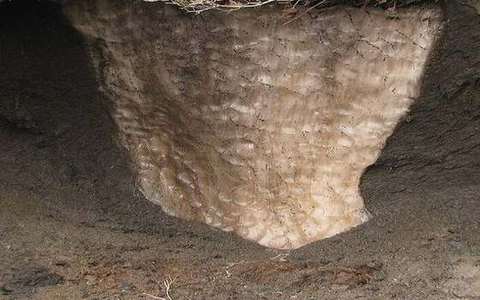 crown in the mass-movement lab — a TERMS crop, not the glossary plate and not the lab cover. A TERMS crop, not the glossary plate and not the lab cover. Source: Wikimedia Commons / NASA / USGS / NOAA, public domain or CC.Wikimedia Commons / NASA / USGS / NOAA, public domain or CC
Toe
The downslope bulge. On a coast, waves pick it apart.
 toe in the mass-movement lab — a TERMS crop, not the glossary plate and not the lab cover. A TERMS crop, not the glossary plate and not the lab cover. Source: Wikimedia Commons / NASA / USGS / NOAA, public domain or CC.Wikimedia Commons / NASA / USGS / NOAA, public domain or CC
Pore pressure
Water pressure in the gaps. Raised, it reduces effective strength.
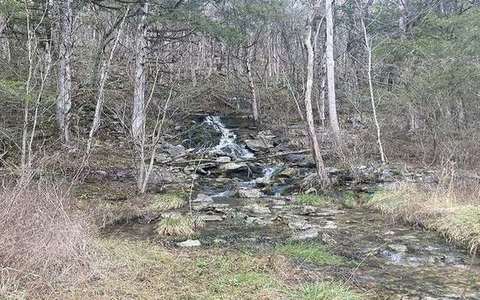 pore pressure in the mass-movement lab — a TERMS crop, not the glossary plate and not the lab cover. A TERMS crop, not the glossary plate and not the lab cover. Source: Wikimedia Commons / NASA / USGS / NOAA, public domain or CC.Wikimedia Commons / NASA / USGS / NOAA, public domain or CC
Till
Unsorted glacial sediment. Holderness cliffs are till. Weak when wet.
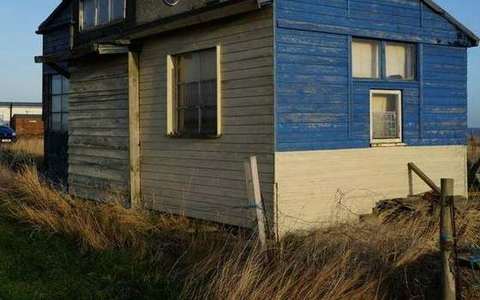 Till in the mass-movement lab — a TERMS crop, not the glossary plate and not the lab cover. Unsorted glacial sediment. Source: Wikimedia Commons / NASA / USGS / public domain.Wikimedia Commons / NASA / USGS / public domain
Mass movement
Downslope movement of rock or soil under gravity. Water is a trigger, not the transport.
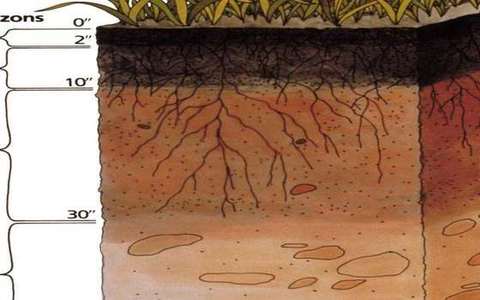 mass movement in the mass-movement lab — a TERMS crop, not the glossary plate and not the lab cover. A TERMS crop, not the glossary plate and not the lab cover. Source: Wikimedia Commons / NASA / USGS / NOAA, public domain or CC.Wikimedia Commons / NASA / USGS / NOAA, public domain or CC