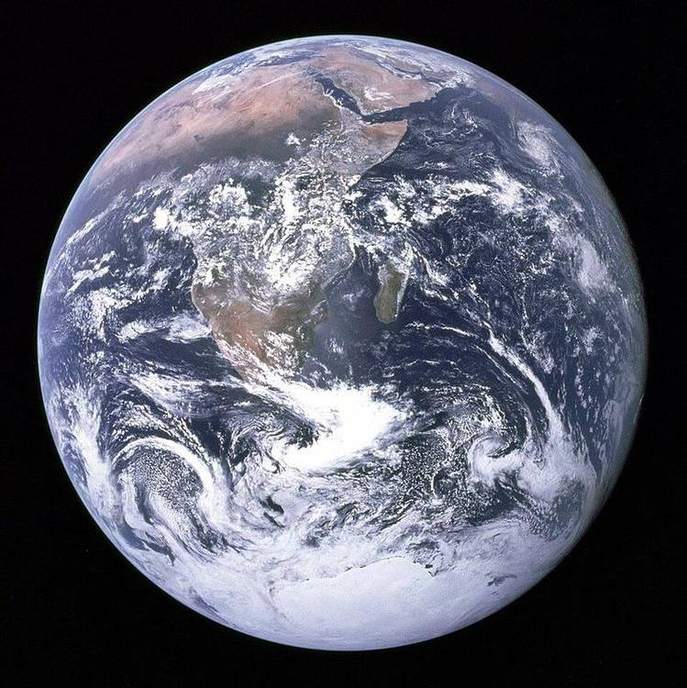
 A sphere, not a table of seasons. Axial tilt writes the calendar.NASA / Apollo 17 AS17-148-22727, public domain
Why this matters
Leeds in December is dark by late afternoon. Miami still has a high noon Sun. Same star, same calendar month. The difference is latitude on a 23.44° axis, not a closer orbit. UK horticulture, Scottish day length, and a Californian winter greenhouse all run on this geometry. Fieldwork in Snowdonia in June is long light; the same slope in December is a short, low Sun. Florida growers care about hours above a useful incidence angle — the same number UK glasshouses plot on a yield curve. A Lerwick December is shorter still. If a class blames July closeness, they will misread every OS day-length graph and every USGS insolation map they meet next.
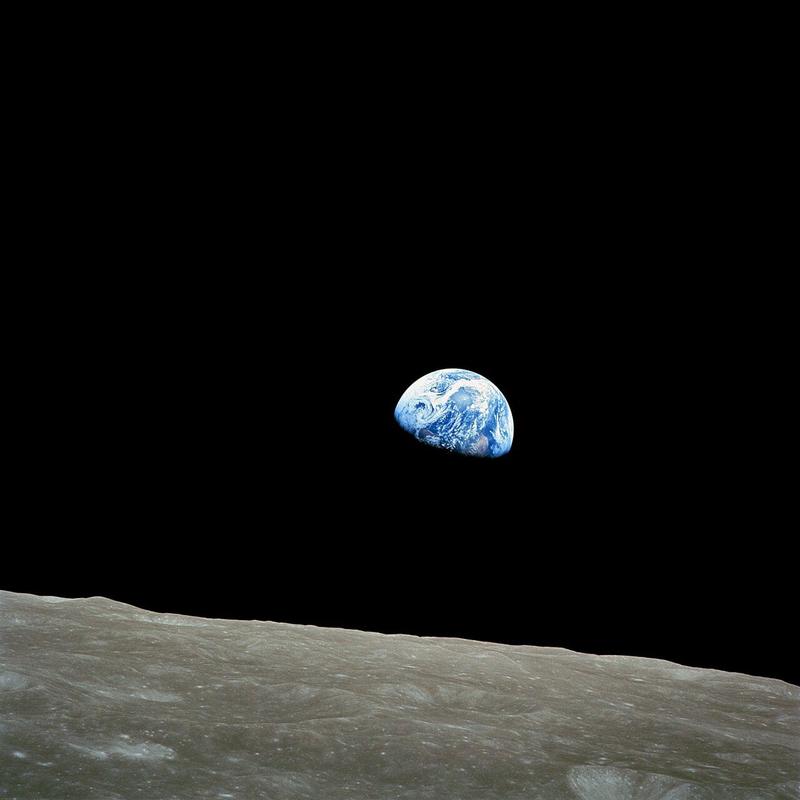 A second photograph for the projector script — not the lab cover.Wikimedia Commons / NASA / USGS
The mechanism
Earth’s spin axis keeps nearly the same direction as the planet goes around the Sun. June: the northern hemisphere leans toward the Sun, so London’s noon Sun is high and the day is long. December: the opposite. What moves: the planet’s place on the orbit, and which hemisphere is leaned toward the lamp. What does not: the axis’s aim, near Polaris, over one year. What is conserved: the 23.44° lean, and a nearly circular orbit. Distance to the Sun is the trap. Perihelion — nearest the Sun — falls in early January, during northern winter. If distance caused seasons, London and Sydney would share summer. They do not. The small extra insolation at perihelion is a few percent, a school figure, not a season. The terminator walks north and south because of tilt. Equatorial day length stays near 12 hours; London swings from about 8 to 16. The lie the model tells: orbit radius is shrunk so Earth is readable. Tilt is true. Eccentricity is a labelled switch.
How to drive the model
Play a year at 23.44°. Watch the terminator walk. Pause on 21 June, then 21 December. Drag tilt to 0° and play again: the seasonal walk dies. Then 35° to see polar extremes grow. Toggle ‘Exaggerate distance’ so the orbit looks stretched, then turn it off: the real orbit is almost a circle. Keyboard: Space play, arrows scrub the year, L labels, R reset, P projector. City markers: London, Cairo, Nairobi, Sydney, Ushuaia. Ask which city is in summer before you reveal the label.
If the model will not spin
The globe is to scale as a sphere. The orbit radius is not: if it were, Earth would be a speck. The Sun is drawn large enough to read from the back of the room. Tilt is true. Eccentricity is offered as a labelled lie so you can switch it off. Without the 3D view keep four sentences. A tilted axis. A nearly circular orbit. June is northern summer. December is southern summer. Perihelion is in January, so distance is not the season. London and Sydney never share summer. That is enough for Check on paper.
Film
Why we have seasons. Khan Academy. About 8 min. Khan Academy on YouTube. CC BY-NC-SA. Educational embed, autoplay off. Autoplay off.
Misconceptions
Summer happens because Earth is closer to the Sun.
Seasons are a tilt effect. Earth is actually nearest the Sun in early January, during northern winter.
The axis wobbles each year, pointing first north then south.
Over one year the axis stays pointed the same way, near Polaris. The hemisphere that leans toward the Sun changes because Earth has moved around the orbit.
The equator has no seasons, so the Sun is always overhead there.
Equatorial day length stays near 12 hours, but noon altitude still shifts with declination. Overhead Sun only happens between the tropics, and not every day.
Axial tilt
The 23.44° lean of Earth’s spin axis relative to its orbit. The lean’s direction stays nearly fixed as Earth goes around the Sun.
 Axial tilt in the seasons lab — a TERMS crop, not the glossary plate and not the lab cover. The 23.44° lean of Earth’s spin axis relative to its orbit. Source: Wikimedia Commons / NASA / USGS / public domain.Wikimedia Commons / NASA / USGS / public domain
Terminator
The moving line between day and night. In this lab it walks north and south through the year because of tilt.
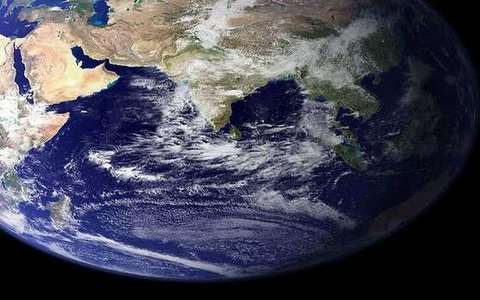 Terminator in the seasons lab — a TERMS crop, not the glossary plate and not the lab cover. The moving line between day and night. Source: Wikimedia Commons / NASA / USGS / public domain.Wikimedia Commons / NASA / USGS / public domain
Solstice
When one hemisphere leans most toward the Sun (June, NH) or most away (December, NH).
 Solstice in the seasons lab — a TERMS crop, not the glossary plate and not the lab cover. When one hemisphere leans most toward the Sun (June, NH) or most away (December, NH). Source: Wikimedia Commons / NASA / USGS / public domain.Wikimedia Commons / NASA / USGS / public domain
Equinox
When neither pole leans toward the Sun. Day and night are about equal everywhere.
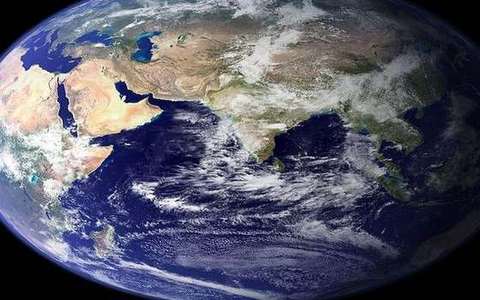 Equinox in the seasons lab — a TERMS crop, not the glossary plate and not the lab cover. When neither pole leans toward the Sun. Source: Wikimedia Commons / NASA / USGS / NPS, public domain or CC.Wikimedia Commons / NASA / USGS / NPS, public domain or CC
Declination
The latitude where the Sun is overhead at noon. It travels between 23.44°N and 23.44°S.
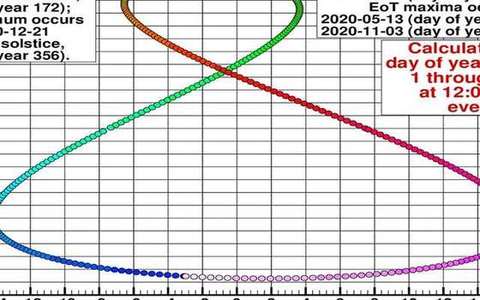 declination in the seasons lab — a TERMS crop, not the glossary plate and not the lab cover. A TERMS crop, not the glossary plate and not the lab cover. Source: Wikimedia Commons / NASA / USGS / NOAA, public domain or CC.Wikimedia Commons / NASA / USGS / NOAA, public domain or CC
Perihelion
Nearest point to the Sun. Early January. A few percent extra insolation, not the cause of seasons.
 perihelion in the seasons lab — a TERMS crop, not the glossary plate and not the lab cover. A TERMS crop, not the glossary plate and not the lab cover. Source: Wikimedia Commons / NASA / USGS / NOAA, public domain or CC.Wikimedia Commons / NASA / USGS / NOAA, public domain or CC
Revolution
One trip around the Sun. About 365.25 days. Not the same as rotation (the daily spin).
 revolution in the seasons lab — a TERMS crop, not the glossary plate and not the lab cover. A TERMS crop, not the glossary plate and not the lab cover. Source: Wikimedia Commons / NASA / USGS / NOAA, public domain or CC.Wikimedia Commons / NASA / USGS / NOAA, public domain or CC