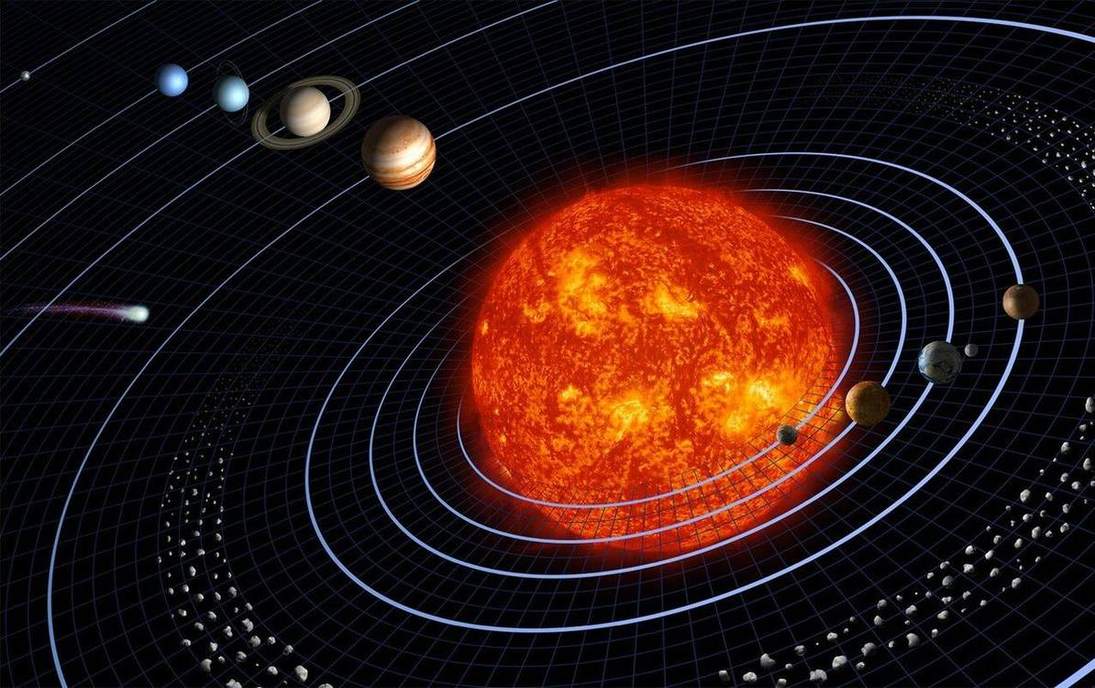
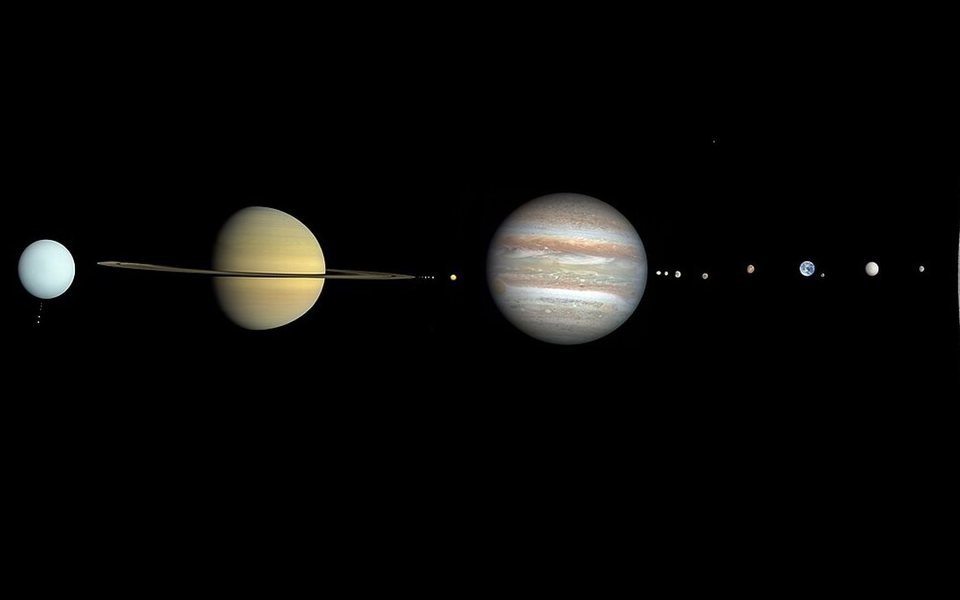
 A sphere among other spheres.NASA, public domain
Why this matters
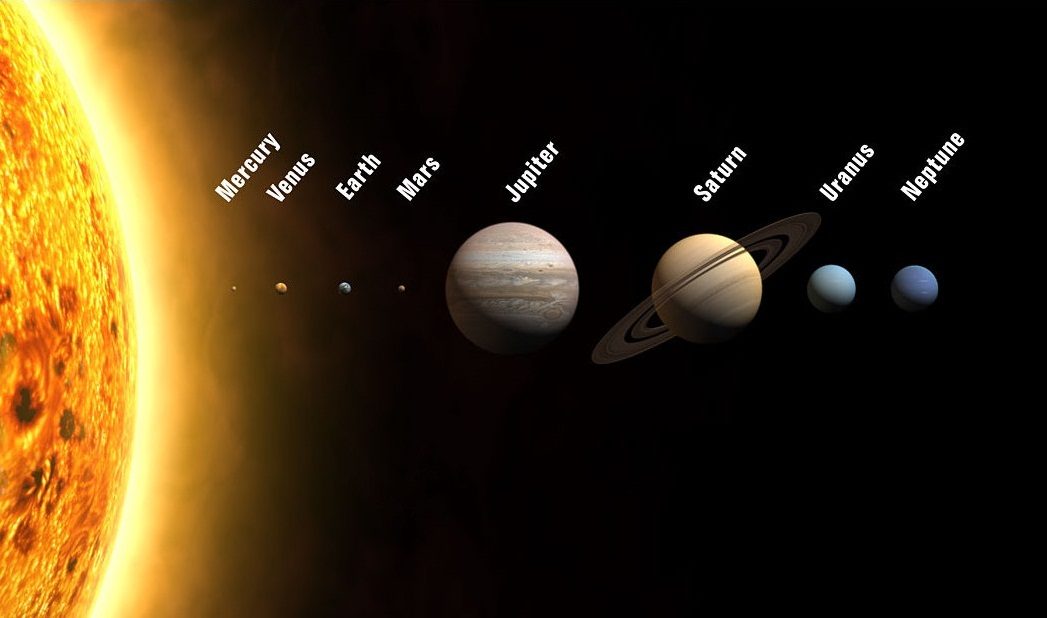
A London planetarium kit parks Jupiter beside Mars on a table. A night sky over Miami does not. Distances are the first lie every classroom model tells, and this lab names it. Greenwich treats Earth as a labelled planet, not a special case. The same star that lights a Holderness beach lights Hawaii. Eight names. Two families: rock, then gas and ice. A ring you can point at from the back row. Scale literacy is the skill. If you cannot say which number is size and which is orbit, you cannot read a NASA poster, a GCSE diagram, or a news graphic that sits Saturn next to Earth. Fieldwork does not need the plastic kit. It needs one sentence: closer planets lap the outer ones; periods lengthen with distance; sizes on the table are not the same lie as the gaps. That sentence travels from Leeds to a Florida pier without changing.
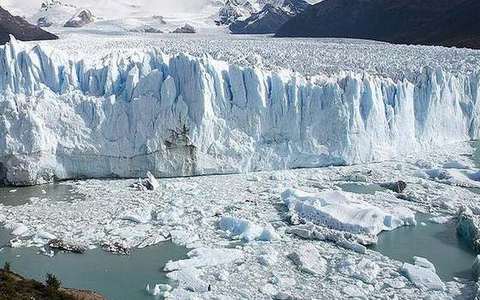
 A second photograph for the projector script — not the lab cover.Wikimedia Commons / NASA / USGS
The mechanism
Input is time: one school year on the slider. The Sun sits still. Eight planets run their rings. Mercury, Venus, Earth, Mars lap the outer four. Jupiter, Saturn, Uranus, Neptune take longer because they are farther, not because this lab plots mass as the clock. What moves: position on the orbit. What does not: the order of the eight, the Sun’s place at the centre of this set, the fact of closed paths. What is conserved: Kepler’s bargain — closer, faster. Period squared with distance cubed, in school language. Toggle True distance and the set tells a different honesty. Orbits stretch toward astronomical units. Planets shrink toward dust. You cannot keep both size and orbit honest on one table. That is the lie visible mode tells on purpose, so the back row can still name Saturn’s ring. The ring is ice and rock, drawn fat. The Sun is a ball you can see, not a 109-Earth-diameter monster at a true gap. Periods stay true-ish: Mercury about 88 days, Earth a year, Neptune about 165 years. Astrology is not in the room. Size is not orbit scale. If the orbits were true and the planets were true, you would need a field, not a screen.
How to drive the model
Play a year. Space toggles play. Arrows nudge time. Speed is 1×, 2×, or 4× on the bar. Toggle True distance: classroom set versus compressed AU. L labels. R reset. P projector. No explode, no slice. Pause on Saturn’s ring. Pause on Mercury lapping Earth. Reset if the class has lost the inner four. The year slider is the orbit clock. Names are the point. The toggle is the honesty. Leave True distance off for the back row, then on once so they hear the dust sentence.
If the model will not spin
If the model will not spin, keep the sentences. Eight planets, one star. Inner four are rock. Outer four are gas and ice giants. Closer orbits are faster. Sizes in a kit are exaggerated so you can see them. True orbits would leave planets as dust. Saturn has a ring of ice and rock. Neptune takes far longer than Earth. Pluto is not on this table. That is enough to sit Check without WebGL, and enough to catch a poster that pretends two scales at once.
Film
How Does the Earth Move? Crash Course Geography #5. Crash Course Geography. About 11 min. Crash Course / Complexly on YouTube. Standard YouTube licence. Educational embed, autoplay off. Autoplay off.
Misconceptions
The model on the table is to scale.
If orbits were to scale, planets would be dust.
Pluto should be on this table as a planet.
Eight planets. Pluto is a dwarf planet. This lab does not park it in the set.
The outer planets take longer because they are bigger.
Period follows distance, not girth. Kepler: closer, faster. Neptune is slow because it is far.
Orbital period
Time for one trip around the Sun. Mercury ~88 days. Earth 1 year. Neptune ~165 years.
 orbital period in the solar-system lab — a TERMS crop, not the glossary plate and not the lab cover. A TERMS crop, not the glossary plate and not the lab cover. Source: Wikimedia Commons / NASA / USGS / NOAA, public domain or CC.Wikimedia Commons / NASA / USGS / NOAA, public domain or CC
Terrestrial planet
Mercury, Venus, Earth, Mars: rock and metal, close in.
 terrestrial planet in the solar-system lab — a TERMS crop, not the glossary plate and not the lab cover. A TERMS crop, not the glossary plate and not the lab cover. Source: Wikimedia Commons / NASA / USGS / NOAA, public domain or CC.Wikimedia Commons / NASA / USGS / NOAA, public domain or CC
Gas giant
Jupiter and Saturn: thick hydrogen–helium envelopes. Not small rocky worlds with weather like ours.
 gas giant in the solar-system lab — a TERMS crop, not the glossary plate and not the lab cover. A TERMS crop, not the glossary plate and not the lab cover. Source: Wikimedia Commons / NASA / USGS / NOAA, public domain or CC.Wikimedia Commons / NASA / USGS / NOAA, public domain or CC
Ice giant
Uranus and Neptune: ices of water, ammonia, methane over a denser interior. Farther and slower than the gas giants.
 ice giant in the solar-system lab — a TERMS crop, not the glossary plate and not the lab cover. A TERMS crop, not the glossary plate and not the lab cover. Source: Wikimedia Commons / NASA / USGS / NOAA, public domain or CC.Wikimedia Commons / NASA / USGS / NOAA, public domain or CC
Astronomical unit
Earth–Sun distance, about 150 million km. The school unit for the inner system.
 astronomical unit in the solar-system lab — a TERMS crop, not the glossary plate and not the lab cover. A TERMS crop, not the glossary plate and not the lab cover. Source: Wikimedia Commons / NASA / USGS / NOAA, public domain or CC.Wikimedia Commons / NASA / USGS / NOAA, public domain or CC
Kepler’s third law
Closer orbits are faster. Period squared scales with distance cubed. This lab shows the qualitative half.
 kepler s third law in the solar-system lab — a TERMS crop, not the glossary plate and not the lab cover. A TERMS crop, not the glossary plate and not the lab cover. Source: Wikimedia Commons / NASA / USGS / NOAA, public domain or CC.Wikimedia Commons / NASA / USGS / NOAA, public domain or CC
True scale
A mode where distances lean toward AU and planets shrink toward dust. Still compressed. Still a lie, just a different one.
 true scale in the solar-system lab — a TERMS crop, not the glossary plate and not the lab cover. A TERMS crop, not the glossary plate and not the lab cover. Source: Wikimedia Commons / NASA / USGS / NOAA, public domain or CC.Wikimedia Commons / NASA / USGS / NOAA, public domain or CC
Planetary ring
Ice and rock in orbit, here Saturn’s. Drawn fat so the back row can see it. Not a solid disc.
 planetary ring in the solar-system lab — a TERMS crop, not the glossary plate and not the lab cover. A TERMS crop, not the glossary plate and not the lab cover. Source: Wikimedia Commons / NASA / USGS / NOAA, public domain or CC.Wikimedia Commons / NASA / USGS / NOAA, public domain or CC