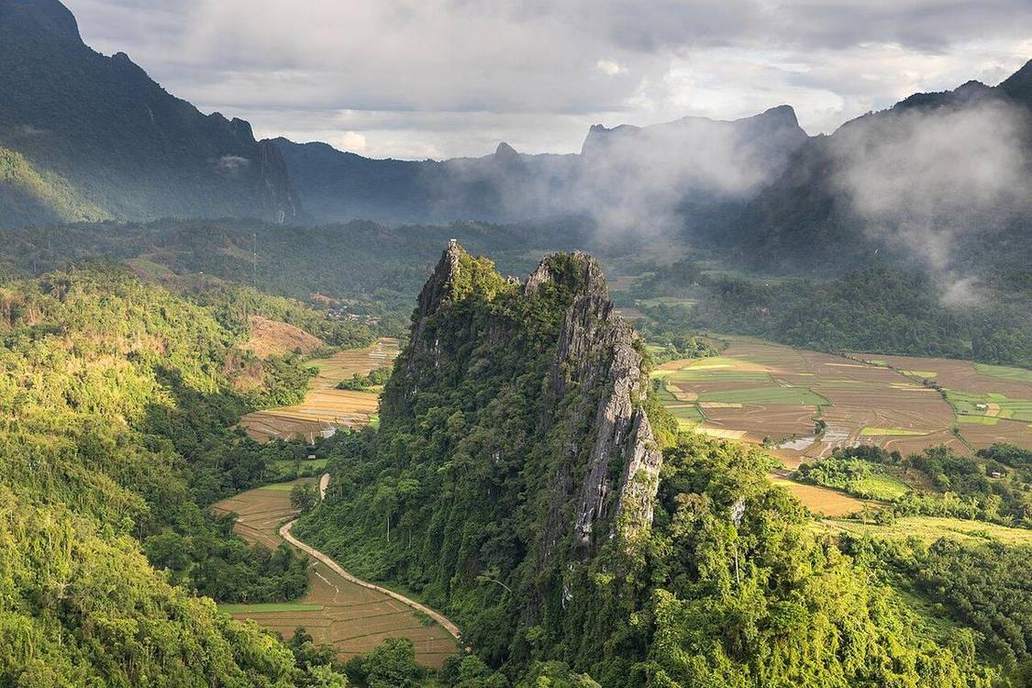
 Carbonation along joints.Wikimedia Commons, CC BY-SA
Why this matters
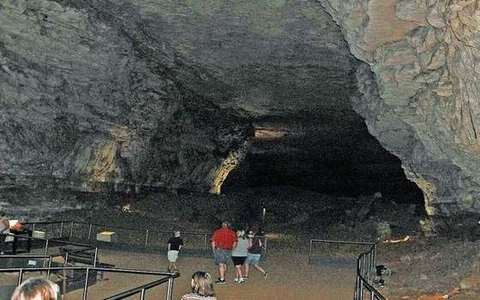
Limestone does not just break. It dissolves along joints: pavement, swallow hole, cave. The Yorkshire Dales are the UK classroom — Malham Cove’s clints and grykes, Gaping Gill taking Fell Beck underground, a resurgence kilometres away. Mammoth Cave, Kentucky, is the US pair: a long, lower-gradient carbonate system in Mississippian limestone, sinkholes on the Chester Upland, the same chemistry at a different map scale. GCSE and A-level carbonation both need that sequence. Soil is thin. Farmers talk limestone in the same breath as drainage. Students who think caves are lava tubes, or that every hole is a volcano, will misread both Malham and Mammoth. Granite does not do this. Chemistry, not magnetism. A surface watershed on limestone may not match the cave.
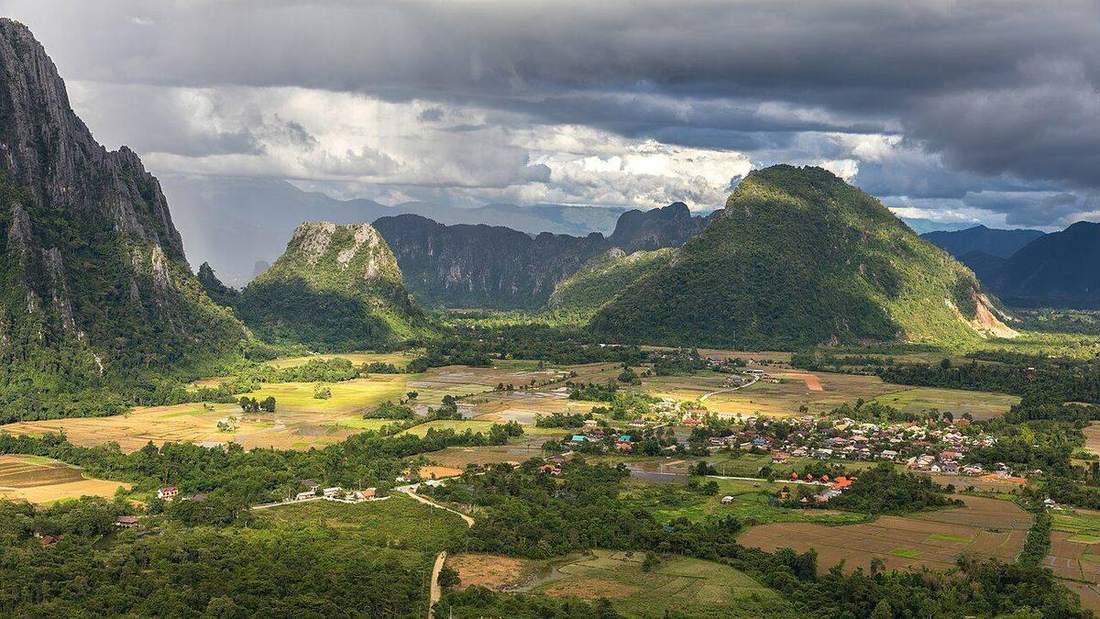 A second photograph for the projector script — not the lab cover.Wikimedia Commons / NASA / USGS
The mechanism
Rainwater picks up carbon dioxide and becomes a weak carbonic acid. It works on calcium carbonate along bedding and joints. The surface becomes a limestone pavement: clints are the blocks, grykes the dissolved fissures. A stream that meets a swallow hole (sinkhole, doline) leaves the surface and may return as a resurgence. Cave passages follow joints and bedding; stalactites need a drip with time. Carbonation plus joints is the machine. Granite does not dissolve that way; these are solution caves in carbonate, not lava tubes. Toggle the cutaway and the chamber appears under the doline. Vertical exaggeration is labelled ×6 so pavement, grykes, and the doline cone read from the back of the room. True grykes on a table would be scratches. The pavement is a schematic block, not a traced Malham sheet. Gaping Gill is the UK poster for a swallow. Mammoth Cave is the long US system. Karst clusters on carbonate rocks because of chemistry. Sequence it: rainfall, carbonation, widened joints, swallow hole, cave passage, then a stalactite if the drip has time. Gordale Scar is a different argument — a gorge, possibly collapse or meltwater — still useful, still not a volcano.
How to drive the model
Pavement first. Clints are the blocks. Grykes are the dissolved fissures between them. A stream swallows — that is the swallow hole, where drainage leaves the surface. Toggle Cave cutaway on. A passage in carbonate, not a lava tube. Keyboard: L labels, R reset. Vertical exaggeration is ×6 and labelled. Granite does not do this. Say so. Finish in Check. Yorkshire Dales pavement and Mammoth Cave are the pair. Every hole is not a volcano. Gaping Gill is the UK poster for a swallow.
If the model will not spin
Without the 3D view: carbonation of limestone along joints makes pavement, swallow holes, and solution caves. Clints and grykes. A swallow is where a stream leaves the surface. These are not lava tubes. Granite does not do this. Yorkshire Dales and Mammoth Cave are the pair. Vertical exaggeration is ×6 and labelled. Chemistry, not magnetism. Gaping Gill is the UK poster. A surface divide on karst may not match the cave beneath. Sequence rainfall to stalactite if you have time.
Film
What is Weathering? Crash Course Geography #21. Crash Course Geography. About 11 min. Crash Course / Complexly on YouTube. Standard YouTube licence. Educational embed, autoplay off. Autoplay off.
Misconceptions
Caves are lava tubes.
These are solution caves in carbonate. Carbonation along joints.
Every hole is a volcano.
A swallow hole is where a stream leaves the surface on limestone. Not magma.
Granite does this too if it rains hard enough.
Karst clusters on carbonate rocks because of chemistry, not rainfall volume alone.
Limestone pavement
Clints and grykes on a bare carbonate surface.
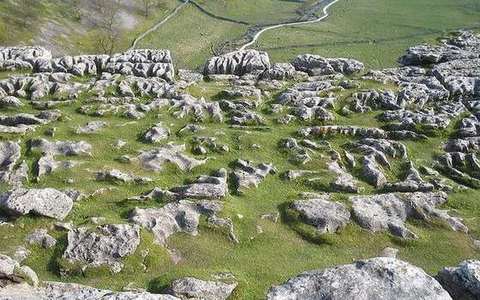 limestone pavement in the karst lab — a TERMS crop, not the glossary plate and not the lab cover. A TERMS crop, not the glossary plate and not the lab cover. Source: Wikimedia Commons / NASA / USGS / NOAA, public domain or CC.Wikimedia Commons / NASA / USGS / NOAA, public domain or CC
Clint
The block on a limestone pavement.
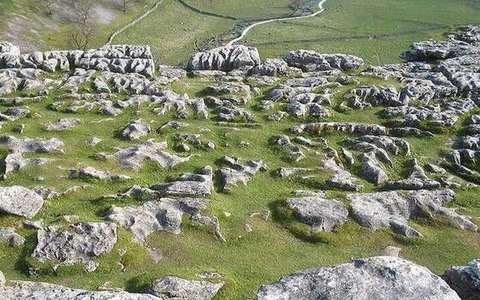 Clint in the karst lab — a TERMS crop, not the glossary plate and not the lab cover. The block on a limestone pavement. Source: Wikimedia Commons / NASA / USGS / public domain.Wikimedia Commons / NASA / USGS / public domain
Gryke
Dissolved fissure between clints.
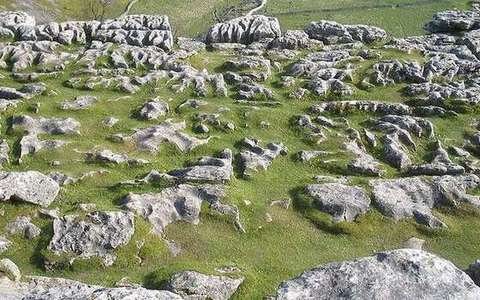 Gryke in the karst lab — a TERMS crop, not the glossary plate and not the lab cover. Dissolved fissure between clints. Source: Wikimedia Commons / NASA / USGS / public domain.Wikimedia Commons / NASA / USGS / public domain
Swallow hole
Point where drainage leaves the surface.
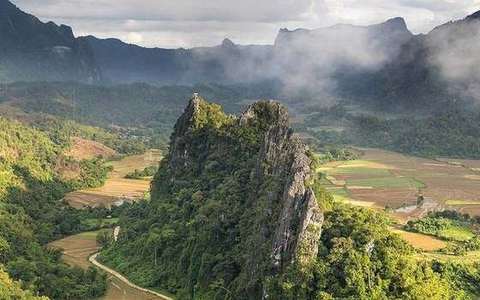 swallow hole in the karst lab — a TERMS crop, not the glossary plate and not the lab cover. A TERMS crop, not the glossary plate and not the lab cover. Source: Wikimedia Commons / NASA / USGS / NOAA, public domain or CC.Wikimedia Commons / NASA / USGS / NOAA, public domain or CC
Carbonation
Weak carbonic acid working on calcium carbonate.
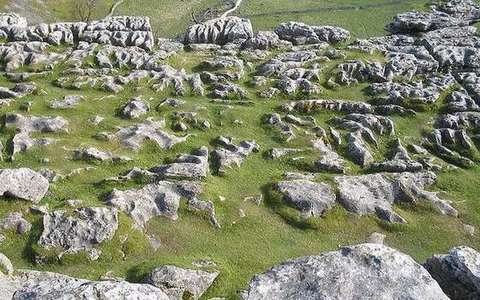 Carbonation in the karst lab — a TERMS crop, not the glossary plate and not the lab cover. Weak carbonic acid working on calcium carbonate. Source: Wikimedia Commons / NASA / USGS / public domain.Wikimedia Commons / NASA / USGS / public domain
Resurgence
Where underground drainage returns to the surface.
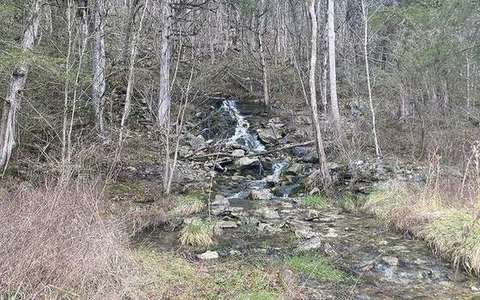 resurgence in the karst lab — a TERMS crop, not the glossary plate and not the lab cover. A TERMS crop, not the glossary plate and not the lab cover. Source: Wikimedia Commons / NASA / USGS / NOAA, public domain or CC.Wikimedia Commons / NASA / USGS / NOAA, public domain or CC
Stalactite
Dripstone growing down from a cave roof, if the drip has time.
 Stalactite in the karst lab — a TERMS crop, not the glossary plate and not the lab cover. Dripstone growing down from a cave roof, if the drip has time. Source: Wikimedia Commons / NASA / USGS / public domain.Wikimedia Commons / NASA / USGS / public domain