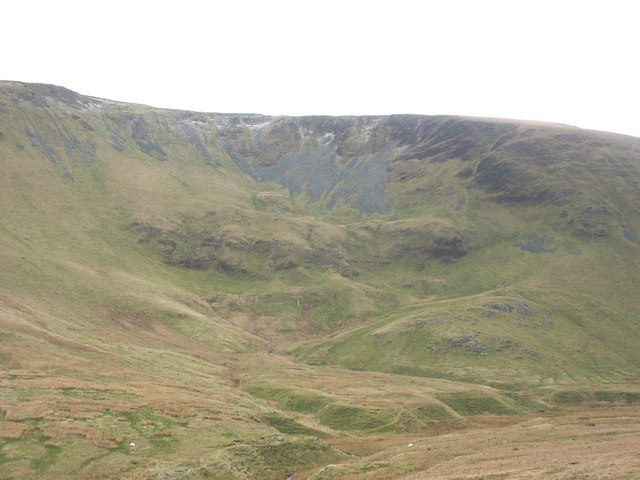
 Freeze–thaw without a glacier.USGS, public domain
Why this matters
The Cairngorm plateau is a museum of freeze–thaw: blockfields, nivation hollows, soils that move when they thaw. Alaska’s coastal plain grows ice-wedge polygons you can see from the air. GCSE cold environments mix glacial and periglacial until students call every cold landform a glacier. This lab is the other machine. If they only remember U-troughs, they will misread a patterned-ground question and a Yorkshire-Dales limestone pavement alike — karst is yet another lab.
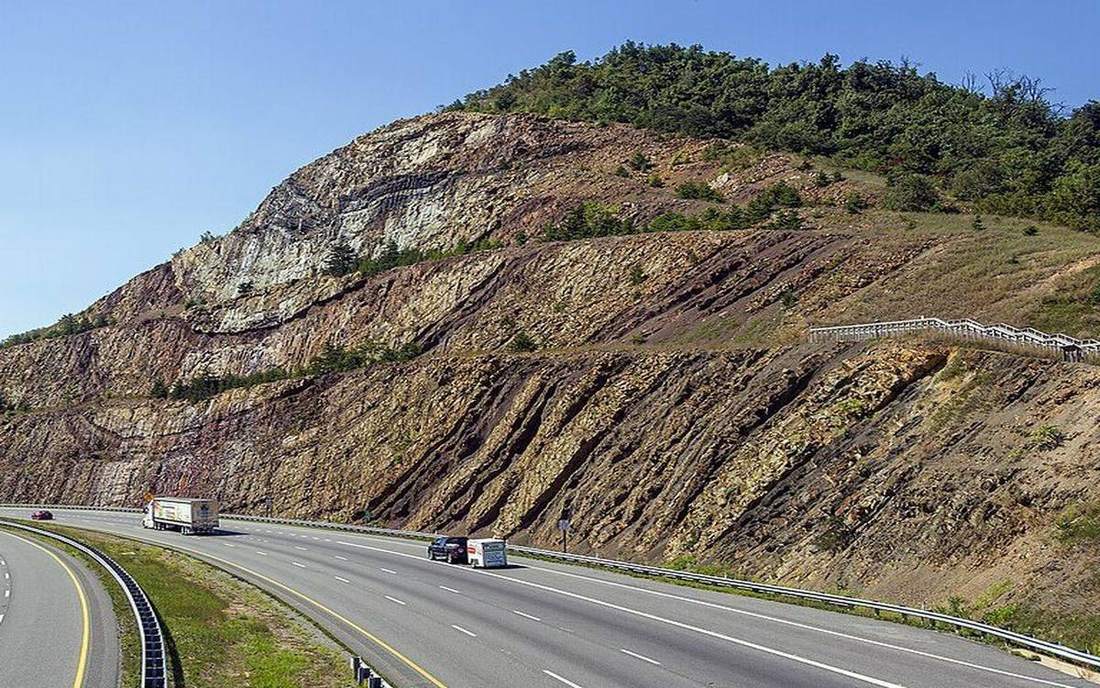 Field photograph or official scientific figure for teaching periglacial. A second photograph for the projector script — not the lab cover. Source: Wikimedia Commons / NASA / USGS / NOAA, public domain or CC.Wikimedia Commons / NASA / USGS / NOAA, public domain or CC
The mechanism
Input is freeze and thaw, again and again. Water in a crack expands when it freezes; the crack widens; summer melt lets more water in. Ice wedges grow. Stones are heaved and sorted into polygons and stripes. Nivation hollows deepen under lingering snow. What moves: ice in the crack, stones toward polygon edges. What does not: a valley glacier. What is conserved: the ground as the stage — this is not ice flowing downhill. The lie: neat hexagons, a single season on a slider. Real polygons take centuries. Real Cairngorms are relict in today’s milder climate; Alaska is live. Vertical exaggeration on the wedge so the back row can see thickness. The glacier lab’s ice has a tongue. This ice is in the ground.
How to drive the model
Leave cycles low. A quiet ground. Raise freeze–thaw. Wedges thicken; polygons read. Keyboard: Space, arrows, L, R, P. Ask whether a glacier is required before you reveal the caption. Toggle labels on the wedge and the polygon, not on a U-trough.
If the model will not spin
Without the canvas: periglacial is cold-ground process without a glacier doing the carving. Freeze–thaw grows ice wedges and patterned ground. Cairngorms relict; Alaska live. A U-trough is the glacier lab. A clint-and-gryke pavement is karst. That is enough for Check.
Film
What Are Glaciers? Crash Course Geography #23. Crash Course Geography. About 11 min. Crash Course / Complexly on YouTube. Standard YouTube licence. Educational embed, autoplay off. Autoplay off.
Misconceptions
Every cold landform was carved by a glacier.
Freeze–thaw in the ground is a different factory. Look for wedges and polygons, not a U-trough.
Ice wedges are tiny rivers.
They are cracks that freeze. Water is a filler, not a channel.
The Cairngorms have no periglacial story because the ice has gone.
Relict forms remain. Alaska is the live pair.
Periglacial
Cold-climate processes at the ice margin, or in cold ground with no glacier.
 periglacial in the periglacial lab — a TERMS crop, not the glossary plate and not the lab cover. A TERMS crop, not the glossary plate and not the lab cover. Source: Wikimedia Commons / NASA / USGS / NOAA, public domain or CC.Wikimedia Commons / NASA / USGS / NOAA, public domain or CC
Ice wedge
A crack that fills and freezes, widening year on year.
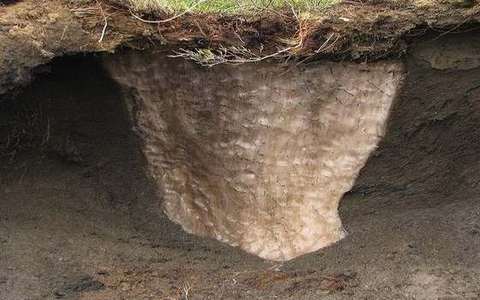 ice wedge in the periglacial lab — a TERMS crop, not the glossary plate and not the lab cover. A TERMS crop, not the glossary plate and not the lab cover. Source: Wikimedia Commons / NASA / USGS / NOAA, public domain or CC.Wikimedia Commons / NASA / USGS / NOAA, public domain or CC
Patterned ground
Sorted stones in polygons or stripes from freeze–thaw heave.
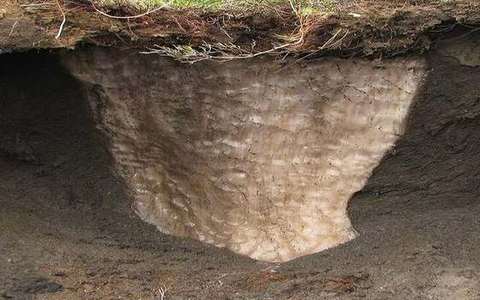 Patterned ground in the periglacial lab — a TERMS crop, not the glossary plate and not the lab cover. Sorted stones in polygons or stripes from freeze–thaw heave. Source: Wikimedia Commons / NASA / USGS / public domain.Wikimedia Commons / NASA / USGS / public domain
Nivation
Erosion under a lingering snow patch. A hollow, not a cirque on its own.
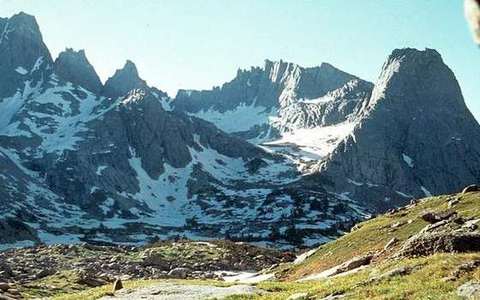 nivation in the periglacial lab — a TERMS crop, not the glossary plate and not the lab cover. A TERMS crop, not the glossary plate and not the lab cover. Source: Wikimedia Commons / NASA / USGS / NOAA, public domain or CC.Wikimedia Commons / NASA / USGS / NOAA, public domain or CC
Blockfield
A sheet of frost-shattered blocks on a plateau.
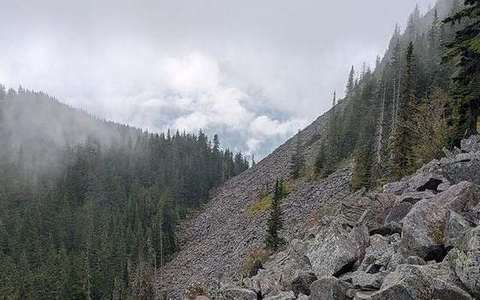 Blockfield in the periglacial lab — a TERMS crop, not the glossary plate and not the lab cover. A sheet of frost-shattered blocks on a plateau. Source: Wikimedia Commons / NASA / USGS / public domain.Wikimedia Commons / NASA / USGS / public domain
Active layer
The top that thaws in summer over permafrost.
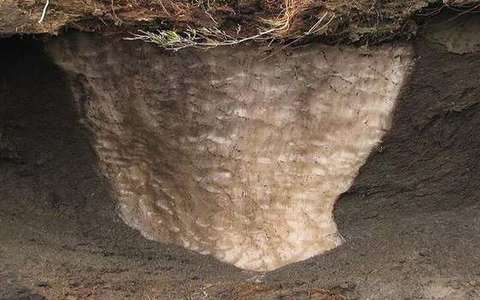 active layer in the periglacial lab — a TERMS crop, not the glossary plate and not the lab cover. A TERMS crop, not the glossary plate and not the lab cover. Source: Wikimedia Commons / NASA / USGS / NOAA, public domain or CC.Wikimedia Commons / NASA / USGS / NOAA, public domain or CC
Permafrost
Ground that stays frozen through the year. Not the same as a glacier.
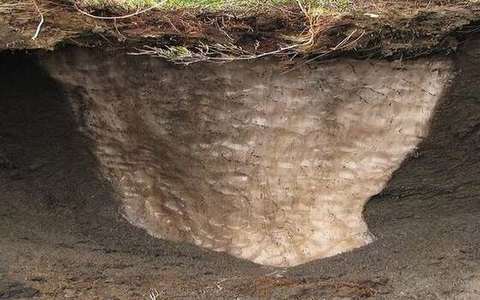 permafrost in the periglacial lab — a TERMS crop, not the glossary plate and not the lab cover. A TERMS crop, not the glossary plate and not the lab cover. Source: Wikimedia Commons / NASA / USGS / NOAA, public domain or CC.Wikimedia Commons / NASA / USGS / NOAA, public domain or CC