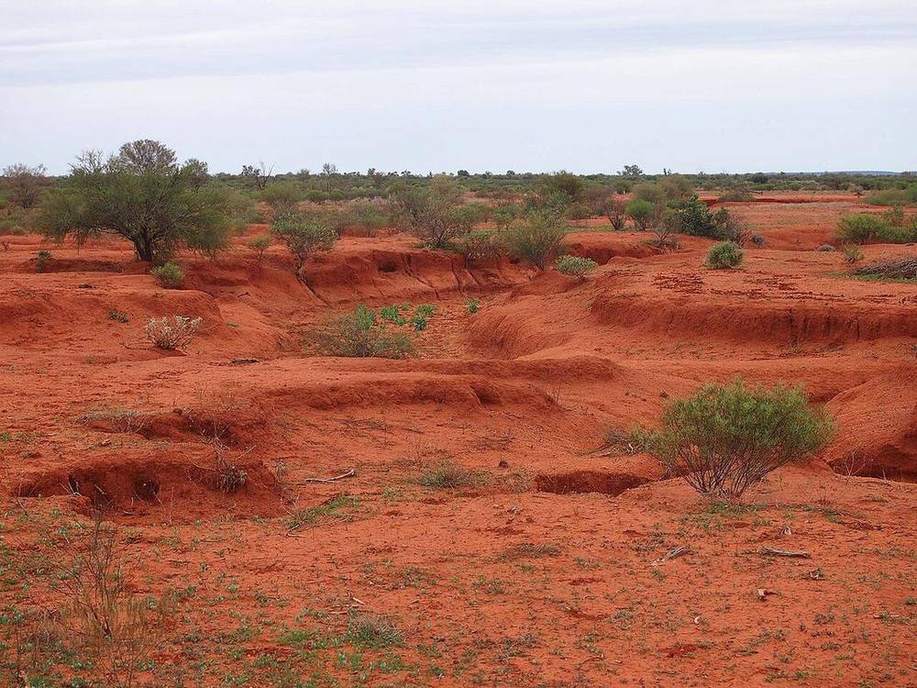
 The A horizon can leave.USDA / public domain
Why this matters
An A horizon is a budget, not an infinite floor. Cover and roots hold it. Bare ground gives it away. The Dust Bowl on the southern Great Plains is the US scale of that sentence: prairie plough, drought, wind, and silt that left the county. UK pairs are smaller and wetter — peaty upland scars, Somerset Levels fields that lose fines when winter rain sits on bare maize, Jurassic Coast and Dales slopes that rill after a wet week. Same physics, different storm. GCSE and APES both want splash, rill and wind named before anyone reaches for a sermon. Raindrop impact detaches. Flow concentrates into rills, then gullies. Wind lifts dry loose grains: deflation. Vegetation raises roughness, intercepts drops, and ties particles with roots. Grand Canyon walls are rock weathering plus export; this lab is the soil skin. Process first. History second. The 1930s are this toggle in the archive, not a morality play without a mechanism.
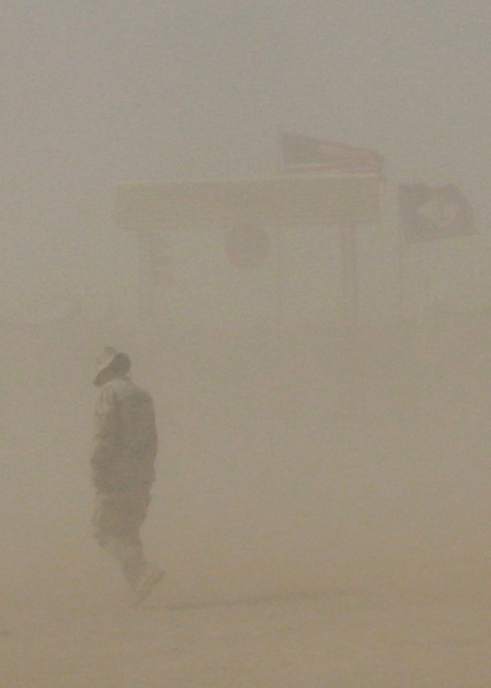 A second photograph for the projector script — not the lab cover.Wikimedia Commons / NASA / USGS
The mechanism
Detachment, then transport, then deposition somewhere else. Rain splash is the first detachment on bare soil: a drop hits, a particle jumps, a crust can form. Once water flows, shear in tiny threads cuts rills — small channels you can step across — which can deepen into gullies. Gradient, texture and storm intensity set the rate. Clay and silt travel in suspension; sand hops. Wind needs dry, loose, unsheltered grains; it is deflation and saltation, the Dust Bowl headline, not a desert-dune textbook by default. Vegetation works three ways: canopy intercepts splash, stems slow water and wind, roots bind. Take the cover off and the same storm writes channels on the plot. Keep it on and the A horizon stays. The lab exaggerates rill depth so the class can see them; real rills are often centimetres. That caption is on the studio. Texture from the triangle lab matters here: silt is easy to lift; a Somerset clay may slake and crust; a sandy A can both drain and blow. Land use is a roughness choice. The physics does not moralise. It just moves particles when nothing holds them.
How to drive the model
Two plots sit side by side. Left is bare: play the storm and watch splash drops, then rills cut the surface, then a wind arrow. Right is cover: cones of vegetation, the A horizon intact. Play through a storm cycle. Orbit from the bare rills to the vegetated plot. Read the studio line: storm fraction, bare rills, vegetated plot stays. Name splash, rill, deflation out loud before you sit down. If Vegetation is on the bar, leave the comparison as two plots; the mechanism is cover versus none. Dust Bowl is the history after the process.
If the model will not spin
Without the canvas the toggle is still the lesson. Bare soil: rain splash detaches, rills cut, wind can lift dry fines. Vegetation on: cover and roots hold the A horizon and slow water and wind. A rill is a small erosional channel; a gully is the next size. Deflation is wind removing loose particles. Soil is not infinite. Dust Bowl spent a prairie A horizon. Somerset Levels and UK uplands are the same idea at smaller, wetter scale. Process first. Then the history. Name splash, rill, wind. Then sit down.
Film
What is Soil (and Why is it Important)? Crash Course Geography #16. Crash Course Geography. About 10 min. Crash Course / Complexly on YouTube. Standard YouTube licence. Educational embed, autoplay off. Autoplay off.
Misconceptions
Soil is infinite.
A horizon is a budget. Dust Bowl spent it.
Only wind erodes soil.
Splash and rill are water. Wind is the dry extra. Name all three.
Vegetation is decoration.
Cover and roots are the hold. Bare is the experiment.
Rain splash
Drop impact that detaches particles at the soil surface.
 rain splash in the soil-erosion lab — a TERMS crop, not the glossary plate and not the lab cover. A TERMS crop, not the glossary plate and not the lab cover. Source: Wikimedia Commons / NASA / USGS / NOAA, public domain or CC.Wikimedia Commons / NASA / USGS / NOAA, public domain or CC
Rill
Small erosional channel cut by running water. Can grow into a gully.
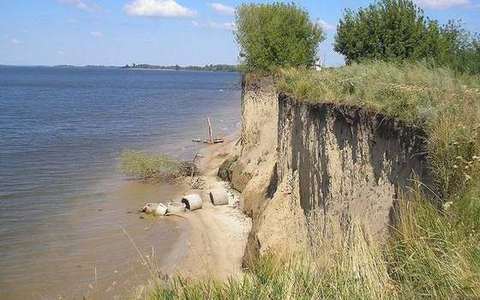 rill in the soil-erosion lab — a TERMS crop, not the glossary plate and not the lab cover. A TERMS crop, not the glossary plate and not the lab cover. Source: Wikimedia Commons / NASA / USGS / NOAA, public domain or CC.Wikimedia Commons / NASA / USGS / NOAA, public domain or CC
Gully
Larger than a rill; a channel you cannot remove with ordinary tillage.
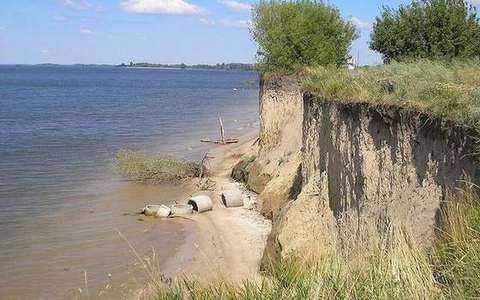 Gully in the soil-erosion lab — a TERMS crop, not the glossary plate and not the lab cover. Larger than a rill; a channel you cannot remove with ordinary tillage. Source: Wikimedia Commons / NASA / USGS / public domain.Wikimedia Commons / NASA / USGS / public domain
Deflation
Wind removing loose particles from a surface.
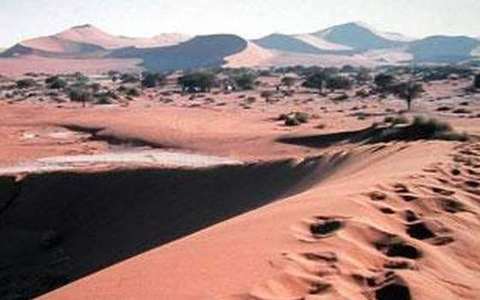 deflation in the soil-erosion lab — a TERMS crop, not the glossary plate and not the lab cover. A TERMS crop, not the glossary plate and not the lab cover. Source: Wikimedia Commons / NASA / USGS / NOAA, public domain or CC.Wikimedia Commons / NASA / USGS / NOAA, public domain or CC
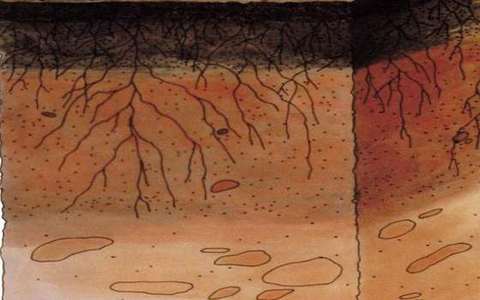
A horizon
Upper mixed mineral-organic soil. The budget this lab spends.
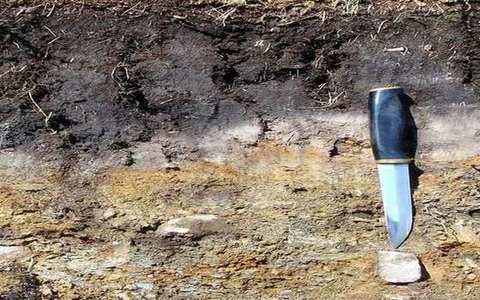 A horizon in the soil-erosion lab — a TERMS crop, not the glossary plate and not the lab cover. Upper mixed mineral-organic soil. Source: Wikimedia Commons / NASA / USGS / public domain.Wikimedia Commons / NASA / USGS / public domain
Cover
Vegetation or residue that intercepts splash and raises roughness.
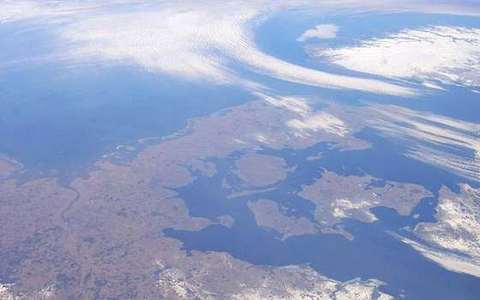 cover in the soil-erosion lab — a TERMS crop, not the glossary plate and not the lab cover. A TERMS crop, not the glossary plate and not the lab cover. Source: Wikimedia Commons / NASA / USGS / NOAA, public domain or CC.Wikimedia Commons / NASA / USGS / NOAA, public domain or CC
Saltation
Grains hopping in wind or water. Sand’s usual travel mode.
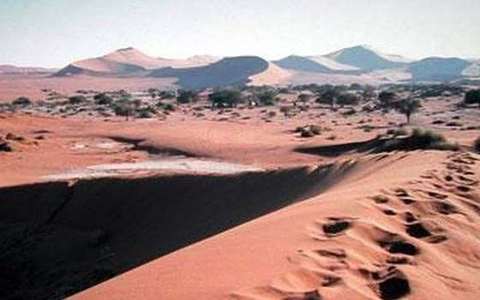 saltation in the soil-erosion lab — a TERMS crop, not the glossary plate and not the lab cover. A TERMS crop, not the glossary plate and not the lab cover. Source: Wikimedia Commons / NASA / USGS / NOAA, public domain or CC.Wikimedia Commons / NASA / USGS / NOAA, public domain or CC