Teachers
GCSE AQA 3.1.1.4 · 15 minutes · no login
Earthquakes
All teacher notes · Open the lab · 2090 words · ·
Why this lesson, and why the 3D
Earthquakes is a fifteen-minute projector lesson, not a homework packet and not a film with a quiz bolted on. Put this hook on the board before you dim the lights: Focus is in the rock. Epicentre is the map dot. P, then S, then the surface wave that does the damage in town. By the end of the slot a pupil should be able to place focus and epicentre and watch P, S, and surface waves. Curriculum tags in the header (GCSE AQA 3.1.1.4; NGSS MS-ESS3-2) are filters, not a flag. The room is worldwide; SI first; International English. Ages on the card (KS3, GCSE, NGSS MS, HS Earth Sci) are a suggested band, not a gate.
San Andreas and Cascadia teach the same waves on different machines. The San Andreas is a transform: Pacific plate northwest, North American southeast, strike-slip you can walk on the Carrizo Plain. 1906 San Francisco and 1989 Loma Prieta are this boundary in living memory. Cascadia is a megathrust: Juan de Fuca diving under North America, a locked subduction zone with a 1700 earthquake dated from Japanese tsunami records and drowned forests. Same P, S and surface waves. Different fault, different depth story, different tsunami story. GCSE AQA 3.1.1.4 and NGSS MS-ESS3-2 both need focus versus epicentre before anyone colours a shake map. UK students will not feel these plates under the desk; they will meet them on the paper. Hawaii and Iceland are volcano labs. Katrina and Sandy are water and wind. This lab is slip in the rock and the three-wave sequence that follows. Map dot is not the underground spark.
The 3D is a named, inspectable object. Click the part, not a caption. If the model will not spin, the Why panel still carries the mechanism, the two photographs, and the film. Do not apologise for the model. Drive it. A silent spin teaches a screensaver. A named mesh that changes under a slider teaches the process.
Fifteen minutes on the projector
Place the focus in the rock. That is the hypocentre, where slip starts. The epicentre is the map dot above it, on the surface, not underground. That is the misconception. The hanging wall and footwall offset along the fault as you play. Fire the waves. P first: fastest, through solid and liquid. Then S: shear. S dies in liquid — the interior lab. Then the surface wave. It arrives later and often does the damage in town. Ask who arrives first. P. Ask what shakes the town. Surface. Keep magnitude versus intensity qualitative here. One is the source. One is what a place feels. San Andreas and Cascadia: same waves, different machine. Transform versus megathrust. Finish in Check.
Open the lab full screen (F). Labels on (L). Speak the first step before you touch a slider: Focus at depth. Epicentre above. Then the second: Play P (fast), S (shear), surface. Then the third: S dies in liquid — interior lab.
The sliders that earn their keep are Focus depth. Space plays; arrows nudge time; R resets. Parameters the URL can remember: depth. If you only have eight minutes, skip the last step and finish in Check. Projector layout (P) is for the back row: one idea, large type, the model still live.
Play from t = 0. The hanging wall and footwall sit either side of a visible fault plane. A spark in the rock is the focus; a cool marker on the top face is the epicentre, joined by a vertical line. P expands as a fast shell. S follows, slower, shearing. Then a surface ring and a ripple on the ground. Orbit so you can see that the epicentre is on the map, not underground. Pause after P and ask who arrived first. Step the camera down to the focus, then up to the epicentre. Click the part: Focus, Epicentre, Fault, P, S, Surface. San Andreas and Cascadia are the locators after the sequence, not before it.
The in-site film is “How we know about the Earth's core” (Khan Academy, about 6 min, Khan Academy on YouTube. CC BY-NC-SA. Educational embed, autoplay off.). Autoplay is off. Play one minute if you need a second voice; do not let the film eat the slot. The 3D still has to move under your hand.
What the third row will get wrong
You will hear the misconception before you have finished the first sentence. Write the false claim on the board and leave it there until the model has contradicted it. Do not skip this. A fluent pupil can recite the hook and still believe the false sentence.
“The epicentre is underground.” — no. Epicentre is on the map. Focus is in the rock.
“The biggest wave arrives first.” — no. P arrives first. Surface waves come later and often do the damage.
“Magnitude and intensity are the same number.” — no. One is the source. One is what a town feels.
Pitfalls to keep in your pocket: Magnitude vs intensity mix-up — keep it qualitative here. Epicentre drawn as a cave. S-waves through the outer core in this lab’s story. Calling every California quake a subduction event. Do not let a pupil leave thinking the 3D is a photograph. It is a teaching model. Where vertical exaggeration exists, T collapses it and the caption says so. A labelled lie of scale is honest. An unlabelled one is a cartoon.
Two places, not a slogan
Slip starts at the focus, also called the hypocentre: a point (really a patch) in the rock. The epicentre is the surface point vertically above it, the map dot, not a cave. Elastic strain stored on a locked fault becomes kinetic energy and heat when the fault slips. Body waves leave first. P-waves are compressional, fastest, and travel through solid and liquid — primary, the first arrival. S-waves are shear, slower, and die in liquid; that fact is the outer-core argument in the interior lab, reused here as a reminder. Surface waves (Love and Rayleigh) travel along the free surface, arrive later, and often do the damage in town because they shake the ground where buildings sit. Play in this lab: P shell grows, then S, then a surface ring and a ripple on the top face. Magnitude is a source-size scale. Intensity is what a place feels — distance, geology, building. Keep that pair qualitative. San Andreas creep versus locked segments, Cascadia’s long recurrence, shallow versus deep: all of that sits on top of focus, epicentre, P, S, surface. Get those five words right and the case pages can work.
The first place to land is San Andreas. The second is Cascadia. Same process, different rock or climate. If a pupil can only name one place, they have a postcard, not a mechanism. Atlas entries for those names are a click from the case list; send them back to the lab with one sentence they can say in Check.
Do not flatten the comparison into “this country versus that country.” Name the landform. Holderness is till, not chalk. Hawaii is a hotspot, not an island arc. Yosemite is a glacial trough, not a river canyon. The 3D is allowed to be schematic; the place names are not allowed to be sloppy.
Figures and the film
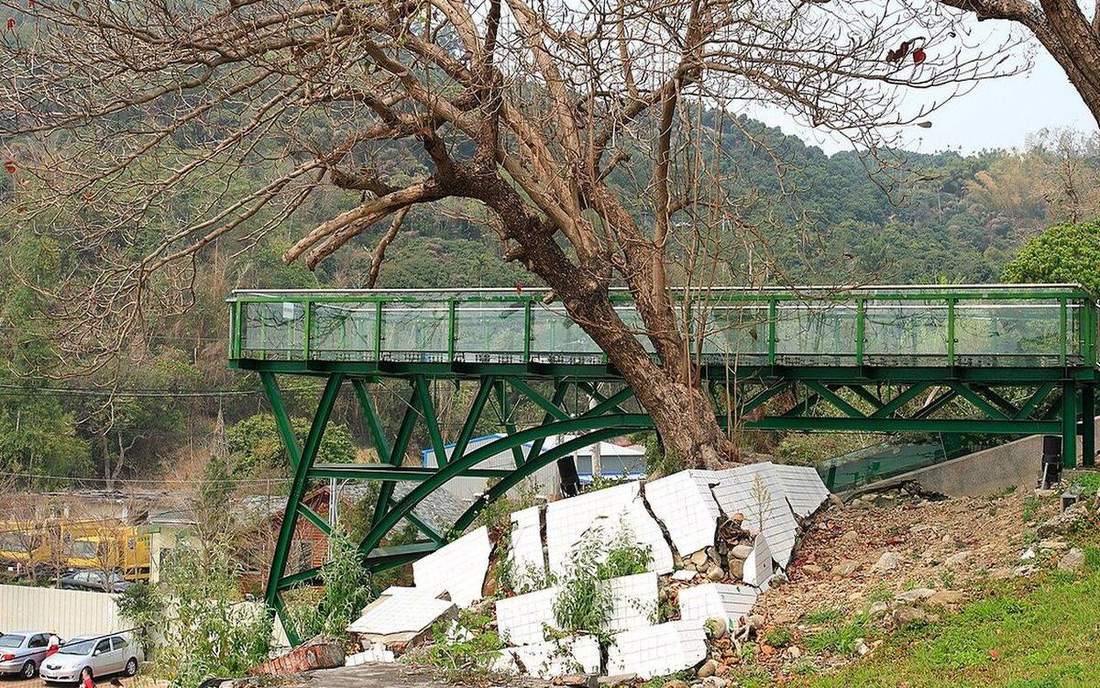
Field photograph: A surface rupture: the fault reached the ground. A surface rupture: the fault reached the ground. This is the classroom sense of earthquakes: a named landform, process, or object. Source: Wikimedia Commons / NASA / USGS / NOAA, public domain or CC. Credit: Wikimedia Commons / NASA / USGS / NOAA, public domain or CC.
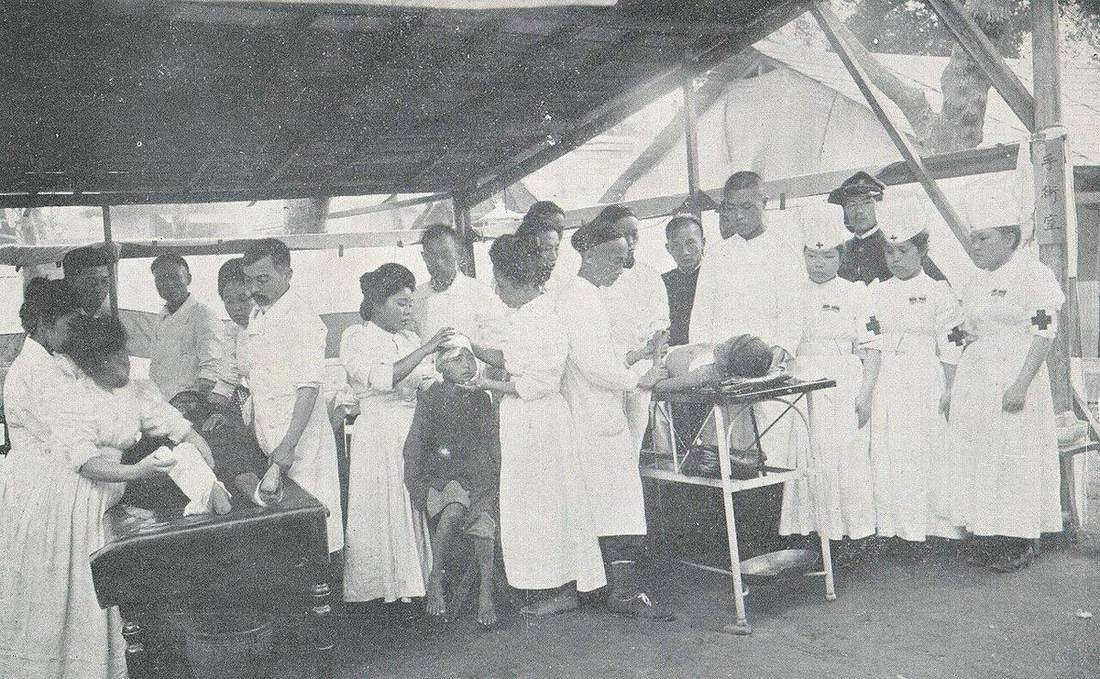
Mechanism photograph: Field or official figure for teaching Earthquakes. A second photograph for the projector script — not the lab cover. Credit: Wikimedia Commons / NASA / USGS.
Two photographs, two jobs. The field picture is the place. The mechanism picture is the process. Do not run the lesson on a single Apollo Earth disc. A carbon-cycle class is a forest and a seam, not a blue marble. An ENSO class is a Pacific temperature map, not Africa from Apollo 17.
Words they must be able to say
Say these out loud once while you click the matching mesh. If a word has no mesh, it still has a photograph in Terms.
Focus: Where the slip starts in the rock. Exam language also accepts “Hypocentre”. Epicentre: Surface point vertically above the focus. The map dot. P-wave: Fastest body wave. Compressional. Travels through solid and liquid. Exam language also accepts “Primary wave”. S-wave: Shear body wave. Slower than P. Dies in liquid. Exam language also accepts “Secondary wave”. Surface wave: Love and Rayleigh waves along the free surface. Often the damage in town. Magnitude: A scale for source size. Not the same as intensity. Intensity: What a place feels, given distance, ground and buildings.
Exam-language toggle (the Teacher tab) swaps UK/US pairs where they exist — levée/levee, arête/arete — so a mixed room is not punished for spelling.
Close the slot
Without the canvas the sequence is still the lesson. Focus (hypocentre) is the point of slip in the rock. Epicentre is the surface point above it, the map dot, not underground. P-waves are fastest and travel through solid and liquid. S-waves shear and die in liquid. Surface waves arrive later and often do the damage in town. Magnitude is the source; intensity is what a place feels. San Andreas is transform; Cascadia is subduction. Same waves, different machine. Do not put the epicentre in a cave.
Finish in Check — ten questions, not a mood. The bank mixes definition, process, the misconception you just killed, a named place, and a read-the-model item (click the part; T). If a pupil can only recite the hook, they have not used the geometry. Wrong answers still show the one-line explain. Do not skip the explain.
Sources on the Teacher tab are the trail, not a bibliography to copy. USGS earthquakes; BGS seismology.
Link back to the live lab and keep the same slug. Do not invent a parallel worksheet that contradicts T, SI, or the named parts.
This note is worldwide. Curriculum tags (GCSE AQA 3.1.1.4; NGSS MS-ESS3-2) are filters, not a flag. A class in Nairobi, London, or Shanghai can use the same 3D. Ages (KS3, GCSE, NGSS MS, HS Earth Sci) are a suggested band. If a sentence only works in one exam board, rewrite it before you project it.
Write these three lines on the board before you dim the lights. One: Focus is in the rock. Epicentre is the map dot. P, then S, then the surface wave that does the damage in town. Two: the misconception “The epicentre is underground.”. Three: the named parts they must click. Then drive the model. Check is ten questions covering definition, process, the misconception, a place, and a read-the-model item. Do not skip the explain on a wrong answer.
Board, units, and what not to say
SI first. Metres, kilometres, degrees Celsius, metres per second. A conversion in brackets is courtesy, not a second system. Do not let a pupil leave thinking the 3D is a photograph. It is a teaching model. Where vertical exaggeration exists, T collapses it and the caption says so.
Do not say “teaching mesh”, “sprinkle”, or “thin free surface not a fat pipe” out loud. Say the landform. Seasons are ~23.44° of axial tilt, not Earth–Sun distance. The outer core is liquid; S-waves do not pass. Yosemite is a glacial U-trough. San Andreas is a transform. Hawaiʻi and Yellowstone are hotspots. Florida is not a glacial trough.
If the room is noisy, projector layout (P) is the back-row setting: one idea, large type, the model still live. Full screen (F). Labels (L). Space plays. Arrows nudge time. R resets. The URL can remember depth. Send them home with the same link; there is no login.
San Andreas and Cascadia teach the same waves on different machines. The San Andreas is a transform: Pacific plate northwest, North American southeast, strike-slip you can walk on the Carrizo Plain. 1906 San Francisco and 1989 Loma Prieta are this boundary in living memory. Cascadia is a megathrust: Juan de Fuca diving under North America, a locked subduction zone with a 1700 earthquake dated from Japanese tsunami records and drowned forests. Same P, S and surface waves. Different fault, different depth story, different tsunami story. GCSE AQA 3.1.1.4 and NGSS MS-ESS3-2 both need focus versus epicentre before anyone colours a shake map. UK students will not feel these plates under the desk; they will meet them on the paper. Hawaii and Iceland are volcano labs. Katrina and Sandy are water and wind. This lab is slip in the rock and the three-wave sequence that follows. Map dot is not the underground spark.
In-site film
How we know about the Earth's core. Khan Academy. Khan Academy on YouTube. CC BY-NC-SA. Educational embed, autoplay off. Autoplay off.