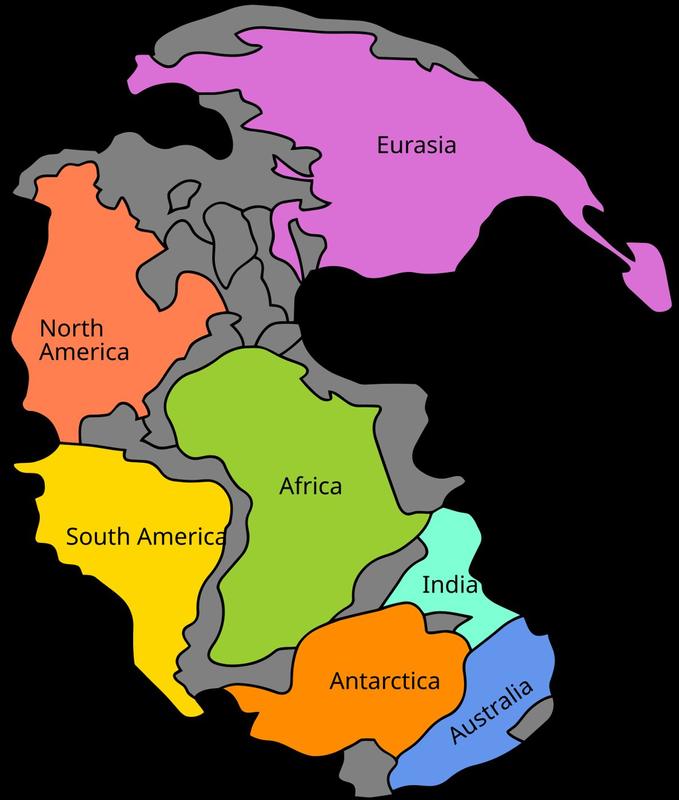
 A continent that walked.NASA / public domain
Why this matters
A GCSE class that still thinks continents plough a static ocean will misread Iceland, the Himalaya, and every earthquake map that follows. The United Kingdom is not a plate. It rides the Eurasian plate. The Mid-Atlantic Ridge at Iceland is where that plate is born, a few centimetres per year, with a country sitting on the split. San Andreas is the United States pair: the Pacific and North American plates slide past, so California’s hazard is transform motion, not a continent chewing through a frozen Pacific. Wegener’s coast fit and matching fossils across the young Atlantic are the evidence. Plates are the mechanism he did not have. Himalaya collision is the same machine stacking crust that Iceland makes at a ridge. If the ocean floor were static, those fossils would be a miracle and India would have no walk north into Eurasia. News maps that freeze today’s beaches as eternal outlines hide 250 million years of passengers. Treat Pangaea as the same plates at an earlier time, not a mythic first Earth.
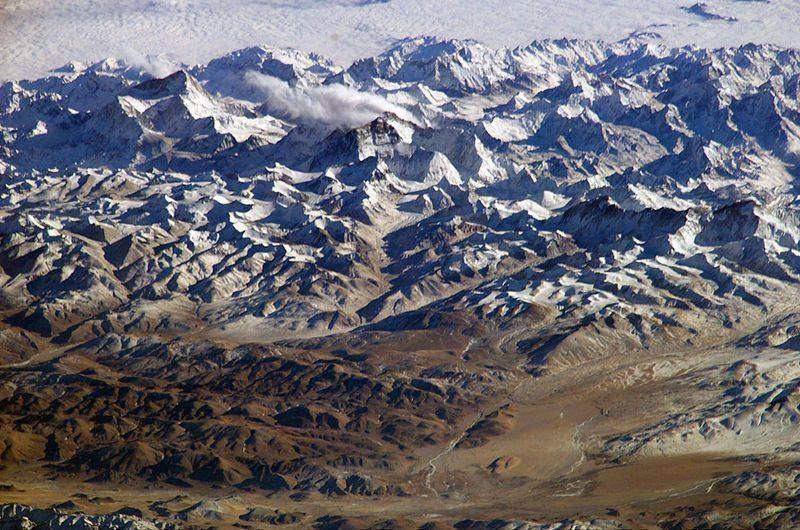 A second photograph for the projector script — not the lab cover.Wikimedia Commons / NASA / USGS
The mechanism
Continents are passengers on lithospheric plates. Oceanic lithosphere is plate too: born at ridges, destroyed at trenches. From about 300 to 180 Ma a supercontinent, Pangaea, sat assembled. It was not Earth’s starting position and not the only supercontinent in the record. After it rifted, the Atlantic opened. India walked north and stacked into Eurasia as the Himalaya. Wegener argued fit, fossils, and palaeoclimate; he lacked a driving mechanism. Seafloor spreading and subduction supply it. Fit the continental shelves, not today’s beaches: the real outline is the shelf edge, the shallow submerged margin. Matching fossils across South America and Africa sit on crust that was once adjacent. The United Kingdom was already a Eurasian passenger. San Andreas did not yet cut California as it does now. The model’s labelled lie is the cartoon you are looking at. Continents are extruded polygons. Motion is a straight interpolation from 250 Ma to the present. Two hundred and fifty million years play in one lesson. Real plate paths curve, rotate, and include microplates this scene omits. The globe is a teaching sphere, not a palaeogeographic reconstruction you could navigate. Fossil matches are dots, not assemblages. What remains true: the pieces fit at the shelf, the Atlantic is young, India has moved north, and neither continent nor ocean is a static stage.
How to drive the model
Set the Ma before present slider to 250 Ma. The pieces fit. Toggle Fossil / fit overlay on so matching fossils and the shelf argument read from the back row. When paused, that slider is the clock; Space play overrides it and walks Pangaea to now. Left and right arrows nudge time. Watch India walk north as the Atlantic widens. L toggles labels. R resets to the lab defaults. P switches projector mode. E explode and X slice do nothing here: this is a globe of passengers, not a cut apple. Pause near 0 Ma and name what changed.
If the model will not spin
Without the 3D view the lesson still holds. At about 250 Ma the continental shelves fit as Pangaea. Matching fossils across the South Atlantic are the evidence; plates are the mechanism. Continents do not plough a static ocean: both are plate. Iceland makes crust at a ridge. The Himalaya stacks it at collision. San Andreas slides. The United Kingdom rides Eurasia. Kola never cored this history; we reconstruct it from fit, fossils, and the ocean floor. If JavaScript is off you still have the caption, the glossary, and Check. Draw two outlines, fit the shelves, then pull them apart. That sketch is the model.
Film
Pangaea. Khan Academy. About 6 min. Khan Academy on YouTube. CC BY-NC-SA. Educational embed, autoplay off. Autoplay off.
Misconceptions
Continents plough through static oceans.
Both are plate.
Pangaea was Earth’s first crust, and the only supercontinent.
It is a late Palaeozoic–Mesozoic assembly, not a starting position, and not the only one.
You fit today’s beaches to prove drift.
Fit continental shelves. The holiday sand is not the outline.
Pangaea
Supercontinent ~300–180 Ma. Not the first, not the only, not Earth’s starting position.
 pangaea in the continental-drift lab — a TERMS crop, not the glossary plate and not the lab cover. A TERMS crop, not the glossary plate and not the lab cover. Source: Wikimedia Commons / NASA / USGS / NOAA, public domain or CC.Wikimedia Commons / NASA / USGS / NOAA, public domain or CC
Continental shelf
Shallow submerged margin. Fit this edge, not today’s beaches.
 continental shelf in the continental-drift lab — a TERMS crop, not the glossary plate and not the lab cover. A TERMS crop, not the glossary plate and not the lab cover. Source: Wikimedia Commons / NASA / USGS / NOAA, public domain or CC.Wikimedia Commons / NASA / USGS / NOAA, public domain or CC
Lithosphere
Crust plus the rigid top of the mantle. Plates are lithosphere, not crust alone.
 lithosphere in the continental-drift lab — a TERMS crop, not the glossary plate and not the lab cover. A TERMS crop, not the glossary plate and not the lab cover. Source: Wikimedia Commons / NASA / USGS / NOAA, public domain or CC.Wikimedia Commons / NASA / USGS / NOAA, public domain or CC
Continental drift
Wegener’s description of moving continents. Plates are the mechanism he lacked.
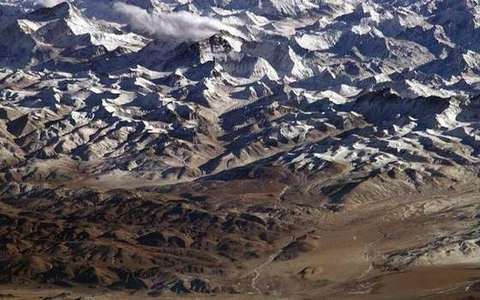 Continental drift in the continental-drift lab — a TERMS crop, not the glossary plate and not the lab cover. Wegener’s description of moving continents. Source: Wikimedia Commons / NASA / USGS / public domain.Wikimedia Commons / NASA / USGS / public domain
Seafloor spreading
New oceanic crust at a ridge. Ocean floor is plate too, born and later destroyed.
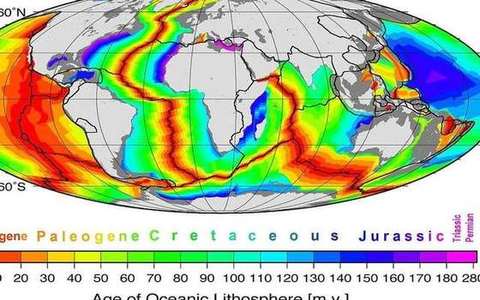 Seafloor spreading in the continental-drift lab — a TERMS crop, not the glossary plate and not the lab cover. New oceanic crust at a ridge. Source: Wikimedia Commons / NASA / USGS / public domain.Wikimedia Commons / NASA / USGS / public domain
Subduction
Oceanic plate consumed at a trench. The conveyor’s far end.
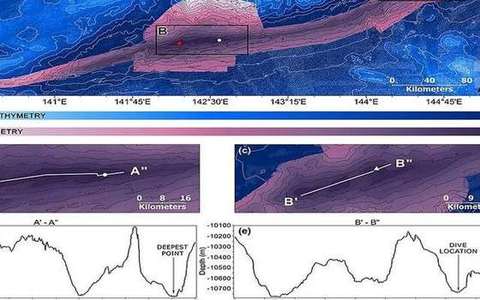 subduction in the continental-drift lab — a TERMS crop, not the glossary plate and not the lab cover. A TERMS crop, not the glossary plate and not the lab cover. Source: Wikimedia Commons / NASA / USGS / NOAA, public domain or CC.Wikimedia Commons / NASA / USGS / NOAA, public domain or CC
Supercontinent
An assembly of most continents. Pangaea is one of several in Earth history.
 supercontinent in the continental-drift lab — a TERMS crop, not the glossary plate and not the lab cover. A TERMS crop, not the glossary plate and not the lab cover. Source: Wikimedia Commons / NASA / USGS / NOAA, public domain or CC.Wikimedia Commons / NASA / USGS / NOAA, public domain or CC
Shelf fit
Matching continents at the shelf edge. Beaches are a Holocene disguise.
 shelf fit in the continental-drift lab — a TERMS crop, not the glossary plate and not the lab cover. A TERMS crop, not the glossary plate and not the lab cover. Source: Wikimedia Commons / NASA / USGS / NOAA, public domain or CC.Wikimedia Commons / NASA / USGS / NOAA, public domain or CC