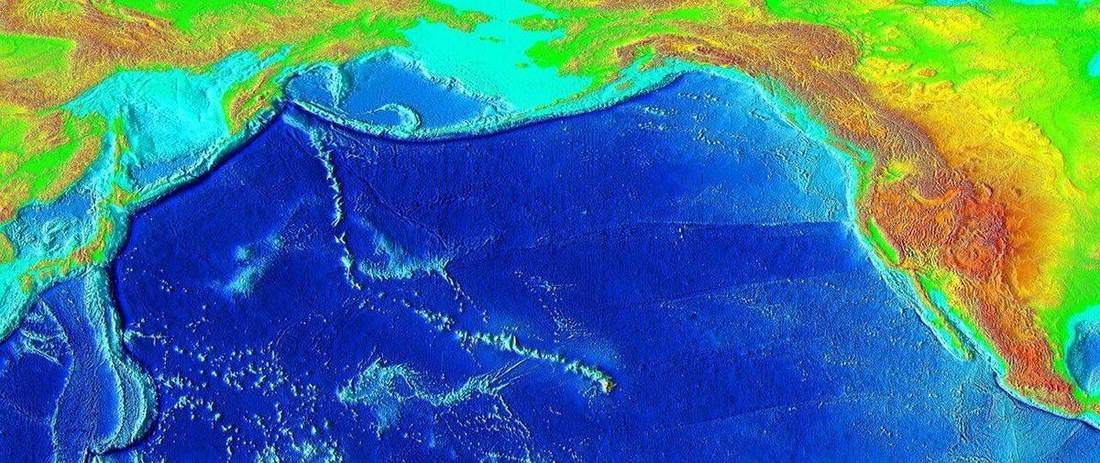
 A plume, a track, ages one way.USGS, public domain
Why this matters
A UK class that dumps every volcano on the Ring of Fire will fail Hawaii and Yellowstone the moment they appear on a map. Most volcanoes do sit on plate edges: Iceland on the Mid-Atlantic Ridge, Cascadia’s arc above a slab. Hawaii does not. It is a hole the Pacific plate is sliding over, a chain of islands and seamounts that get older to the northwest. Yellowstone is the continental analogue: calderas older to the southwest along the Snake River Plain. Two plumes. One idea. Do not teach one plume for both. The United Kingdom rides Eurasia far from either track, which is why British volcanoes are deep-time history, not a live hotspot. United States exam maps pair Hawaii with Yellowstone for a reason: ocean plate versus continent, same mechanism. If all volcanoes were plate-boundary volcanoes, those two tracks would be a mystery and plate motion would lose its best interior clock. Kola never sampled a plume. Age direction on the chain is the clock we actually have.
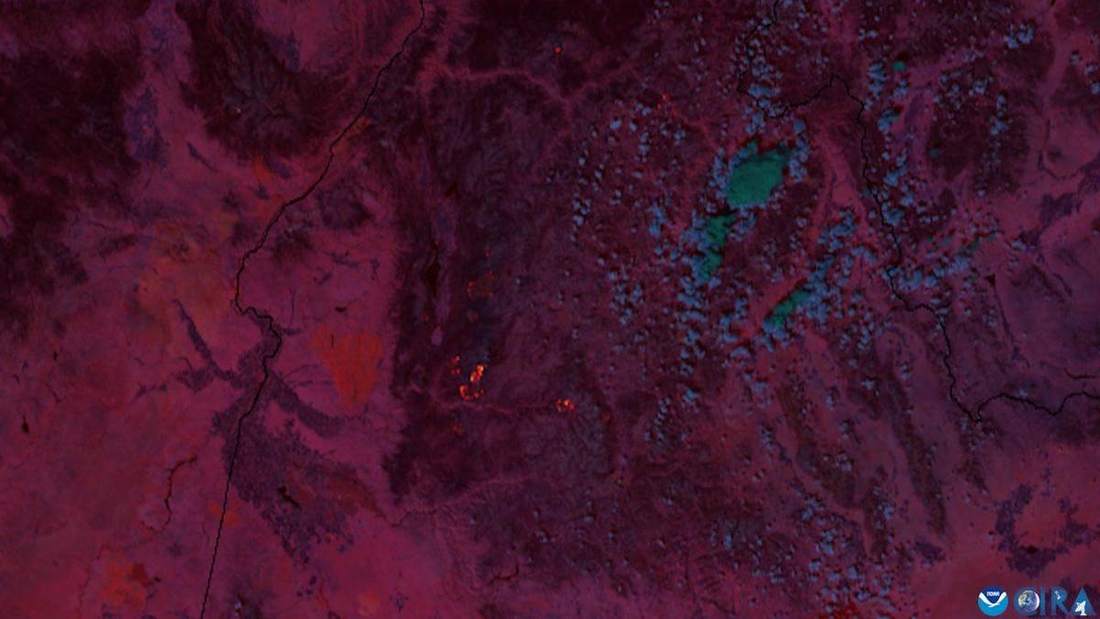 A second photograph for the projector script — not the lab cover.Wikimedia Commons / NASA / USGS
The mechanism
A hotspot is a long-lived mantle plume that can punch magma through a plate interior. The plume stays relatively fixed in the mantle frame; the plate slides. Hawaii: the active island is young; drowned seamounts and atolls age to the northwest along the chain, recording Pacific motion of centimetres per year. Yellowstone: a continental hotspot. Calderas and rhyolite ages young at the park, older toward the southwest. Cascadia is not this story. It is a subduction zone, a volcanic arc above a slab. Iceland is a ridge with a plume bonus, which is why it has a country on it, not a simple Hawaii copy. The model’s labelled lie is the pipe. The plume is drawn as a glowing cylinder you could climb. It is not. It is a thermal anomaly, schematic. Hawaii ages are a 0–10 Ma teaching set, not the full Emperor–Hawaiian bend. Yellowstone is a slab with a track tube, not a geologic map of the Snake River Plain. Motion is sped up by millions of years so a lesson can see the slide. What remains true: two independent plumes, age direction records plate motion, and not every volcano sits on a plate edge. That exception is the proof that plates move.
How to drive the model
Leave the Hawaii toggle on. Press Space: the chain slides northwest while the plume stays. Left and right arrows scrub the same motion. Toggle Yellowstone on and read calderas older to the southwest. Two plumes — do not treat them as one. L toggles labels. R resets. P switches projector mode. E explode and X slice are idle here; there is no onion to pull apart. Ask which way each plate is going from the age direction before you name it. Then turn one track off so the class cannot blur them.
If the model will not spin
Without WebGL the caption still teaches the exception. Hawaii is young at the southeast end, older seamounts northwest. The plume stays; the Pacific plate slides. Yellowstone is a second plume under a continent, ages older to the southwest. Iceland is a ridge, not this story. Cascadia is subduction, not this story. The United Kingdom is not on either track. If JavaScript is off you still have the glossary and Check. Sketch a fixed dot and a sliding plate with dated volcanoes. That drawing is the lab. Two dots if you add Yellowstone. Never one pipe feeding both.
Film
What Are Volcanoes? Crash Course Geography #20. Crash Course Geography. About 13 min. Crash Course / Complexly on YouTube. Standard YouTube licence. Educational embed, autoplay off. Autoplay off.
Misconceptions
All volcanoes are plate-boundary volcanoes.
Hotspots are the exception that proves motion.
Hawaii and Yellowstone are one plume.
Two plumes. One idea. Age tracks point different ways on different plates.
Iceland is a Hawaii copy, and Yellowstone is a mid-ocean ridge.
Iceland sits on a ridge with a plume bonus. Yellowstone is a continental hotspot. Cascadia is subduction.
Hotspot
Long-lived mantle plume that can punch a volcano through a plate interior.
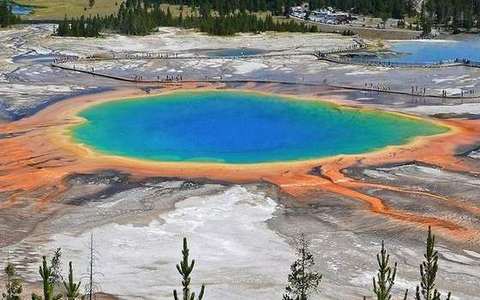 Hotspot in the hotspots lab — a TERMS crop, not the glossary plate and not the lab cover. Long-lived mantle plume that can punch a volcano through a plate interior. Source: Wikimedia Commons / NASA / USGS / public domain.Wikimedia Commons / NASA / USGS / public domain
Seamount
Drowned volcano on the track. Older, farther from the active island.
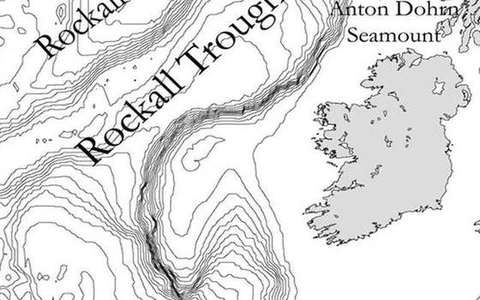 seamount in the hotspots lab — a TERMS crop, not the glossary plate and not the lab cover. A TERMS crop, not the glossary plate and not the lab cover. Source: Wikimedia Commons / NASA / USGS / NOAA, public domain or CC.Wikimedia Commons / NASA / USGS / NOAA, public domain or CC
Mantle plume
A thermal upwelling, relatively fixed in the mantle frame. Not a climbable pipe.
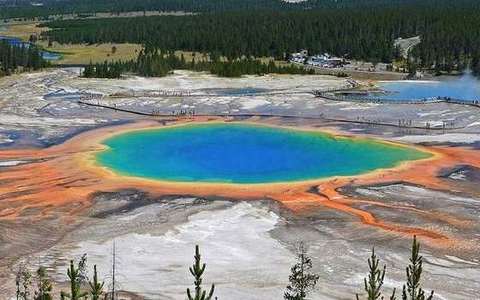 mantle plume in the hotspots lab — a TERMS crop, not the glossary plate and not the lab cover. A TERMS crop, not the glossary plate and not the lab cover. Source: Wikimedia Commons / NASA / USGS / NOAA, public domain or CC.Wikimedia Commons / NASA / USGS / NOAA, public domain or CC
Caldera
Collapse crater after a large eruption. Yellowstone’s track is dated calderas.
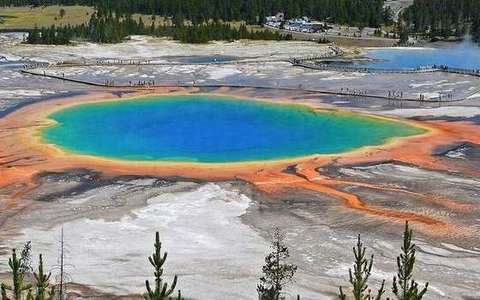 Caldera in the hotspots lab — a TERMS crop, not the glossary plate and not the lab cover. Collapse crater after a large eruption. Source: Wikimedia Commons / NASA / USGS / public domain.Wikimedia Commons / NASA / USGS / public domain
Age-progressive chain
Volcanoes that get older away from the active centre, recording plate motion.
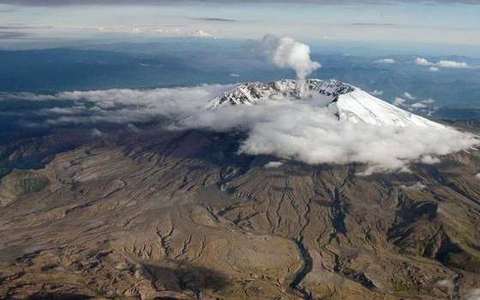 age progressive chain in the hotspots lab — a TERMS crop, not the glossary plate and not the lab cover. A TERMS crop, not the glossary plate and not the lab cover. Source: Wikimedia Commons / NASA / USGS / NOAA, public domain or CC.Wikimedia Commons / NASA / USGS / NOAA, public domain or CC
Intraplate volcanism
Melting inside a plate, not at a ridge, trench, or transform.
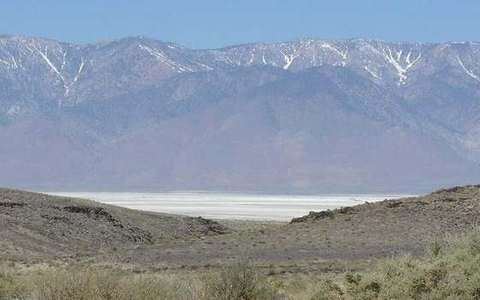 intraplate volcanism in the hotspots lab — a TERMS crop, not the glossary plate and not the lab cover. A TERMS crop, not the glossary plate and not the lab cover. Source: Wikimedia Commons / NASA / USGS / NOAA, public domain or CC.Wikimedia Commons / NASA / USGS / NOAA, public domain or CC
Partial melt
A fraction of the rock is liquid. A plume is not a magma ocean.
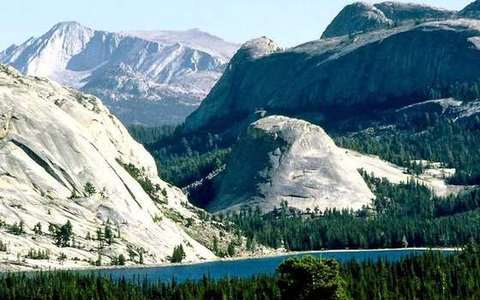 partial melt in the hotspots lab — a TERMS crop, not the glossary plate and not the lab cover. A TERMS crop, not the glossary plate and not the lab cover. Source: Wikimedia Commons / NASA / USGS / NOAA, public domain or CC.Wikimedia Commons / NASA / USGS / NOAA, public domain or CC
Guyot
An eroded, drowned volcano on a hotspot track, often now an atoll or bank.
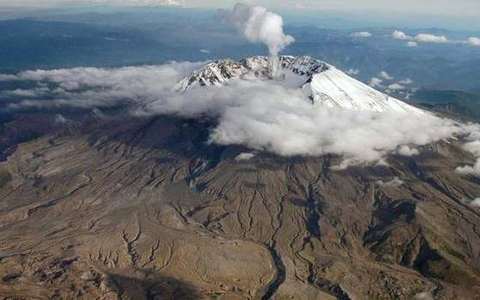 guyot in the hotspots lab — a TERMS crop, not the glossary plate and not the lab cover. A TERMS crop, not the glossary plate and not the lab cover. Source: Wikimedia Commons / NASA / USGS / NOAA, public domain or CC.Wikimedia Commons / NASA / USGS / NOAA, public domain or CC