Case study · US
Yellowstone
Wyoming
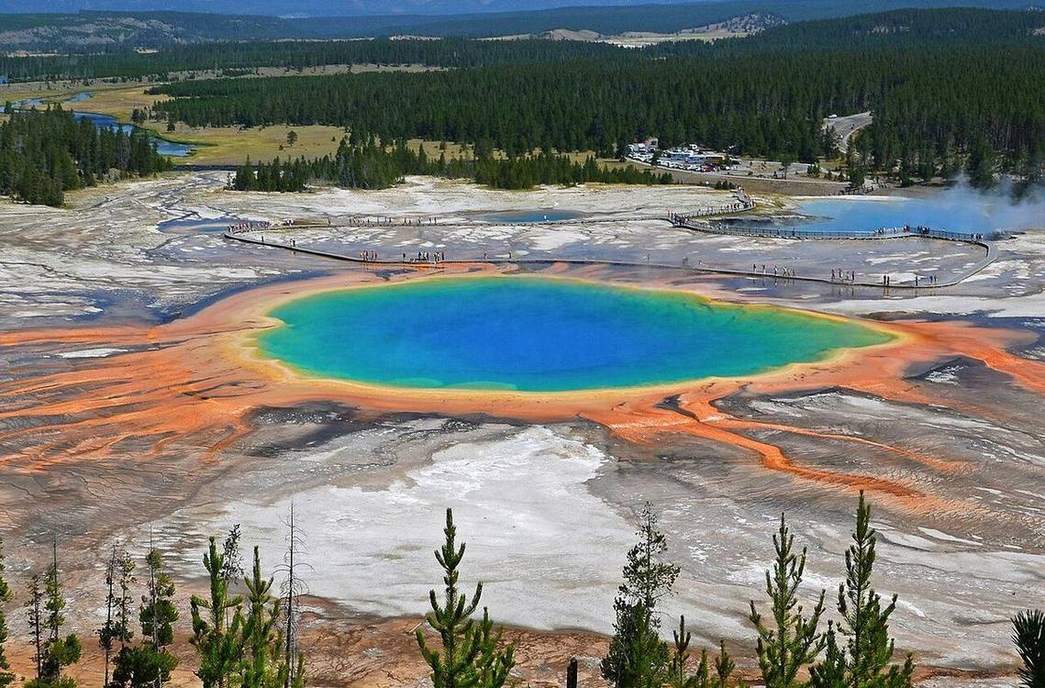
A mantle plume under a continent. Caldera, hydrothermal system, and a track of older calderas toward the southwest.
Locator · OpenStreetMap / OpenFreeMap · 44.60°, -110.50°
The plume is not a plate boundary. It is a hole the plate is sliding over — the continental cousin of Hawaii. Older calderas in the Snake River Plain get older toward the southwest, which is the track. The present hydrothermal system — geysers, hot springs — is magma heat under a continental crust that is still there.
Seismic tomography, not a drill hole, is how we argue for the plume. The Kola Superdeep borehole, the deepest hole in rock, did not reach the mantle. We infer layering from P and S waves. Yellowstone’s magma reservoir is imaged the same way: geophysics, not a sample bottle from the core.
A ‘supervolcano’ headline is not a teaching plan. The teacher script is: hotspot versus boundary, continental crust versus oceanic, rhyolite versus basalt, caldera versus stratovolcano. The interior lab’s liquid outer core is a different liquid from this melt. Students mix those liquids if you let them.
Exam-style question
How does the age pattern of calderas in the Snake River Plain support a hotspot under a moving plate?
Teacher hint: Age increases southwest along the track. Plate moved; plume stayed relatively fixed.
Process labs
Sources
- USGS Yellowstone Volcano Observatory
- USGS hotspot track