Case study · US
Hawaii hotspot track
Hawaiʻi to Emperor seamounts
A plume under an oceanic plate. Shield volcanoes, a chain that gets older toward the northwest, and a bend into the Emperor seamounts.
Locator · OpenStreetMap / OpenFreeMap · 19.40°, -155.30°
Loihi and the Island of Hawaiʻi are young. Maui, Oʻahu, Kauaʻi are older. The Emperor seamounts are older still and trend north. The Pacific plate is moving over a relatively fixed mantle plume. That is the track. The bend records a change in plate motion about 47 million years ago — a sentence for A-level, not a KS3 requirement.
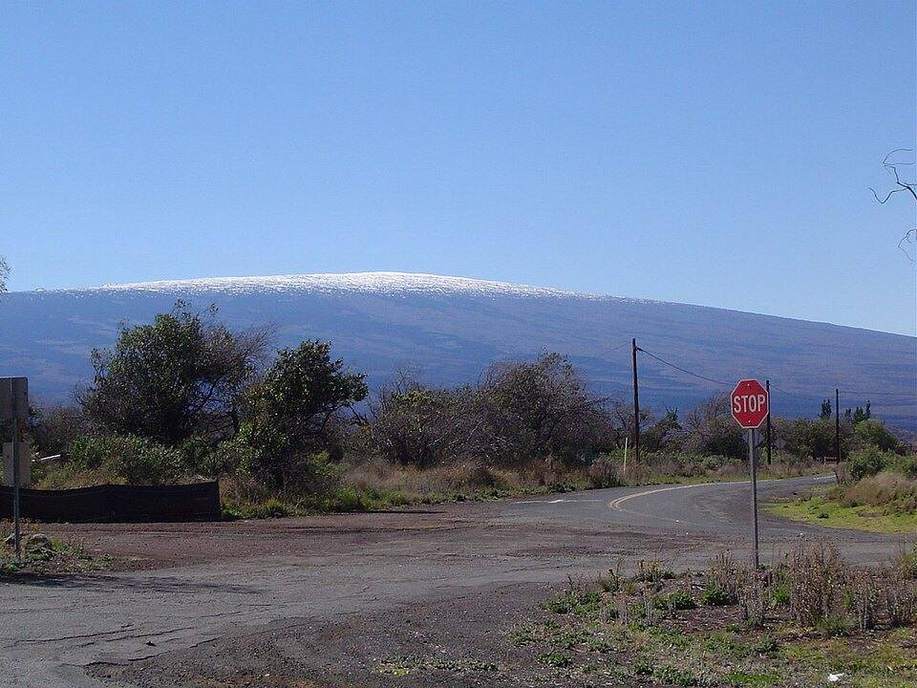
Shield volcanoes here are basalt, low viscosity, long lava flows, gentle slopes. Mauna Loa and Kīlauea are the type. They are not stratovolcanoes. Viscosity, not ‘bigger explosion’, is the difference. The volcanoes lab’s slider is this.
A hotspot can sit far from a plate boundary. That is the misconception to kill: not all volcanoes sit on the Ring of Fire. Hawaii is the exhibit. Yellowstone is the continental exhibit. Iceland is the ridge-plus-plume exhibit.
Exam-style question
Why are Hawaiian volcanoes shields rather than stratovolcanoes, and how does the island chain record plate motion?
Teacher hint: Low-viscosity basalt. Age increases away from the active plume as the plate slides.
Process labs
Sources
- USGS Hawaiian Volcano Observatory
- NOAA / ocean exploration seamounts