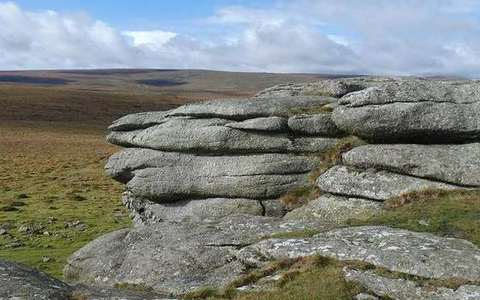
 An igneous texture you can name. This is the classroom sense of rock-cycle: a named landform, process, or object. Source: Wikimedia Commons / NASA / USGS / NOAA, public domain or CC.Wikimedia Commons / NASA / USGS / NOAA, public domain or CC
Why this matters
The Jurassic Coast and the Grand Canyon are one rock cycle at walking distance. Dorset’s Lias, Oolite and chalk are a sedimentary sequence you can stand on in an afternoon; Arizona’s walls are sandstone, shale and limestone stacked above Vishnu Schist. A UK party names beds. A US party names formations. Both sentences are about type, not about a birthday. GCSE and NGSS both ask students to move material among igneous, sedimentary and metamorphic without treating the poster as a one-way ladder. Age is independent of type: a Palaeozoic limestone is old and sedimentary; a Holocene basalt is young and igneous. Somerset Levels alluvium was rock somewhere up-catchment. Dust Bowl silt was a mineral in a parent. Yorkshire Dales limestone is a carbonate bed waiting for carbonation. A cliff, a soil and a quarry are the same budget in different rooms. Temperature and pressure light melt and metamorphism; weathering and lithification light the other arrows. UK coast, US canyon: same machine, different outcrop.
 Field photograph or official scientific figure for teaching rock cycle. A second photograph for the projector script — not the lab cover. Source: Wikimedia Commons / NASA / USGS / NOAA, public domain or CC.Wikimedia Commons / NASA / USGS / NOAA, public domain or CC
The mechanism
Igneous rock crystallises from melt. Intrusive bodies cool slowly and grow visible crystals; extrusive lava cools fast and is often finer. Weathering and erosion then break any rock into sediment. Deposition, burial, compaction and cementation lithify that sediment into sedimentary rock: beds you can count on a Dorset cliff or a canyon wall. If burial and tectonics raise temperature and pressure without a full melt, minerals recrystallise in the solid state. That is metamorphic rock, often foliated when directed stress is present. Raise heat further and the rock melts; magma is igneous waiting to happen again. Those are paths, not a ranking and not a staircase. Granite can weather to sand. Sandstone can become quartzite. Quartzite can melt. Limestone can become marble without ever being called young. In this lab the sliders bias the arrows: high temperature and pressure favour metamorphism and melt; cooler conditions keep the weathering arrow lit. School diagrams that draw a circle with three boxes are a cartoon of that network. The honest sentence is that any type can become any other if the conditions exist. Full melt is igneous. Change in the solid is metamorphic. Bits stuck together are sedimentary. That distinction is the plot.
How to drive the model
Orbit the trio. A granite plug with crystals sits on top. Horizontal sedimentary beds sit to the right. Foliated metamorphic beds sit to the left. Magma glows below. Play to watch the magma pulse. Raise Temperature and Pressure together. When their mean is high, hot arrows toward melt and metamorphism brighten and cool weathering arrows dim. Drop both sliders and the cool arrows return. Read T and P on the studio readout. Labels name the three rocks. Step the camera for a closer look at one type. The arrows loop both ways. Do not teach them as a ladder.
If the model will not spin
Without the canvas you still have the cycle in sentences. Igneous crystallises from melt. Sedimentary is deposited bits lithified into beds. Metamorphic is existing rock changed in the solid by heat and pressure. Arrows run both ways: weathering toward sediment, burial and heat toward metamorphism and melt. The Jurassic Coast is a sedimentary sequence. Grand Canyon walls are that idea with metamorphic basement at the river. Sedimentary is not always young. Age is independent of type. Temperature and pressure bias the path; they do not invent a fourth rock. A one-way ladder is the diagram to refuse.
Film
What Are Rocks and How Do They Form? Crash Course Geography #17. Crash Course Geography. About 11 min. Crash Course / Complexly on YouTube. Standard YouTube licence. Educational embed, autoplay off. Autoplay off.
Misconceptions
Sedimentary is ‘young’ always.
Age is independent of type.
The cycle is a one-way ladder: igneous, then sedimentary, then metamorphic.
Any type can become any other if the conditions exist. Arrows loop.
Metamorphic means the rock melted and froze again.
School story: change in the solid. Full melt is igneous again.
Igneous
Rock crystallised from melt. Intrusive cools slowly; extrusive cools at the surface.
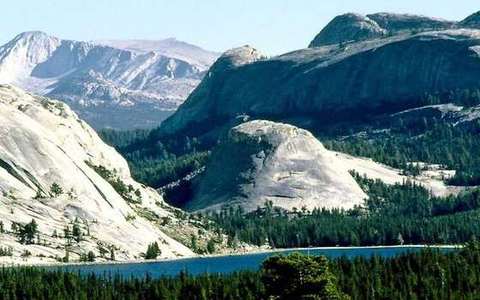 igneous in the rock-cycle lab — a TERMS crop, not the glossary plate and not the lab cover. A TERMS crop, not the glossary plate and not the lab cover. Source: Wikimedia Commons / NASA / USGS / NOAA, public domain or CC.Wikimedia Commons / NASA / USGS / NOAA, public domain or CC
Sedimentary
Rock from deposited fragments or precipitates, then lithified.
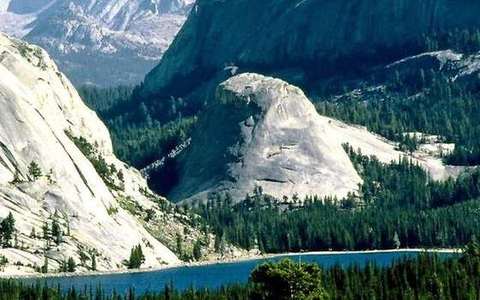 sedimentary in the rock-cycle lab — a TERMS crop, not the glossary plate and not the lab cover. A TERMS crop, not the glossary plate and not the lab cover. Source: Wikimedia Commons / NASA / USGS / NOAA, public domain or CC.Wikimedia Commons / NASA / USGS / NOAA, public domain or CC
Metamorphic
Existing rock changed in the solid by heat and/or pressure, without full melt.
 metamorphic in the rock-cycle lab — a TERMS crop, not the glossary plate and not the lab cover. A TERMS crop, not the glossary plate and not the lab cover. Source: Wikimedia Commons / NASA / USGS / NOAA, public domain or CC.Wikimedia Commons / NASA / USGS / NOAA, public domain or CC
Lithification
Compaction and cementation that turn sediment into sedimentary rock.
 lithification in the rock-cycle lab — a TERMS crop, not the glossary plate and not the lab cover. A TERMS crop, not the glossary plate and not the lab cover. Source: Wikimedia Commons / NASA / USGS / NOAA, public domain or CC.Wikimedia Commons / NASA / USGS / NOAA, public domain or CC
Foliation
Layered mineral fabric from directed stress during metamorphism.
 foliation in the rock-cycle lab — a TERMS crop, not the glossary plate and not the lab cover. A TERMS crop, not the glossary plate and not the lab cover. Source: Wikimedia Commons / NASA / USGS / NOAA, public domain or CC.Wikimedia Commons / NASA / USGS / NOAA, public domain or CC
Magma
Molten rock below the surface. Lava is the same material once it erupts.
 magma in the rock-cycle lab — a TERMS crop, not the glossary plate and not the lab cover. A TERMS crop, not the glossary plate and not the lab cover. Source: Wikimedia Commons / NASA / USGS / NOAA, public domain or CC.Wikimedia Commons / NASA / USGS / NOAA, public domain or CC
Weathering (to sediment)
Breakdown that feeds the sedimentary path. Not the same as erosion.
 weathering to sediment in the rock-cycle lab — a TERMS crop, not the glossary plate and not the lab cover. A TERMS crop, not the glossary plate and not the lab cover. Source: Wikimedia Commons / NASA / USGS / NOAA, public domain or CC.Wikimedia Commons / NASA / USGS / NOAA, public domain or CC