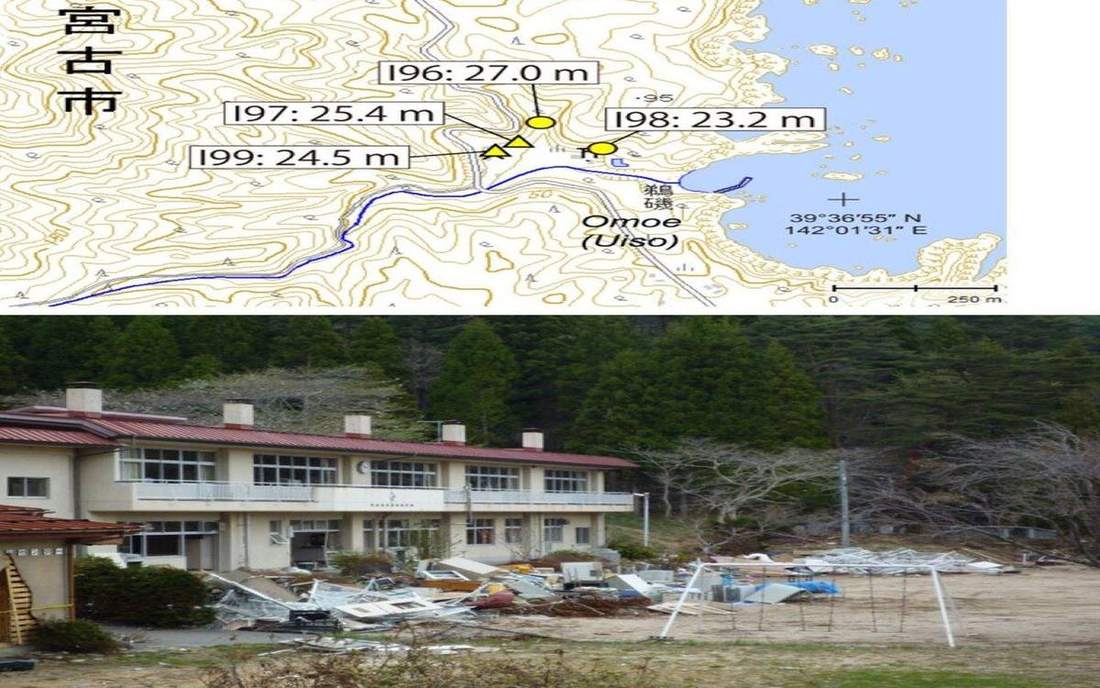
 A tsunami’s run-up on a coast. Long-period wave from a sudden water displacement, often seafloor slip. Source: Wikimedia Commons / NASA / USGS / NOAA, public domain or CC.Wikimedia Commons / NASA / USGS / NOAA, public domain or CC
Why this matters
A tsunami is a long-period wave from a sudden displacement of the water column, most often seafloor slip on a megathrust. Cascadia is the North American drill: Juan de Fuca under North America, a 1700 wave written in Japanese records and in drowned coastal forests. Schools on that coast practise a vertical evacuation for a reason. Hawaii feels distant Pacific tsunamis; Iceland’s ridge is usually the wrong machine. San Andreas is mostly strike-slip: it shakes, it does not typically lift a whole water column. Katrina and Sandy pushed water by wind and pressure — storm surge, a different hazard that still floods a city. Holderness and the 1953 North Sea flood are UK surge and wave attack, not a megathrust. GCSE and NGSS both need that split: displacement wave versus wind sea versus tide. Do not call a UK gale a tsunami. Do not call a hurricane a tsunami. The physics is a lifted column, a fast low wave at sea, a tall slow wave at the coast.
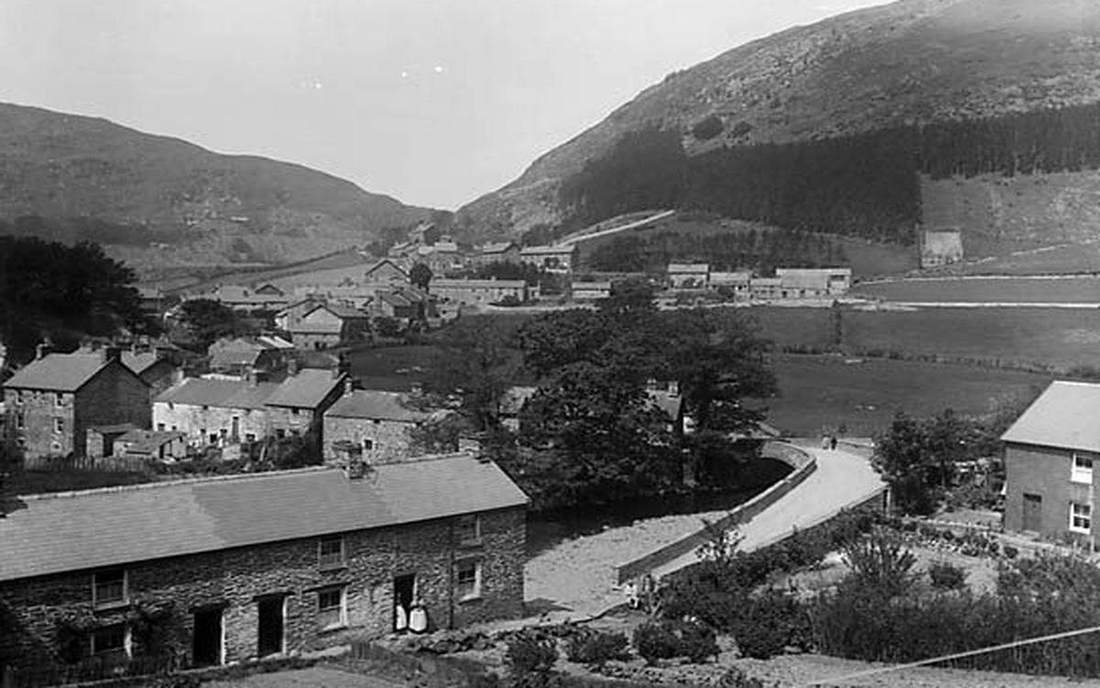 Field photograph or official scientific figure for teaching tsunami. A second photograph for the projector script — not the lab cover. Source: Wikimedia Commons / NASA / USGS / NOAA, public domain or CC.Wikimedia Commons / NASA / USGS / NOAA, public domain or CC
The mechanism
Start with slip. A patch of seafloor jumps up (or down). The whole water column above it moves. That is the source, not a gust and not the Moon. In deep water the wavelength is huge, the amplitude is small, and the speed is high — ships may not notice. Energy is in the column, not in a wind-chopped surface. As the wave enters shallow water it shoals: speed falls roughly with the square root of depth, wavelength shortens, amplitude grows. Green’s law is that story, not a formula dump for KS3. The wave that was a ripple at sea can stand up at a harbour. Bay shape, shelf width and drawdown before the crest all matter; this lab is the cross-section, not a run-up atlas. A storm surge is wind piled against a coast plus a pressure set-up. A tide is gravity of Moon and Sun. A tsunami is displacement. Three water-level machines. Cascadia is the first. Katrina and Sandy are the second. Do not file 1953 under the first. Holderness till cliffs are ordinary storm waves plus a budget, another lab. Keep the verbs: lift, race, shoal, flood.
How to drive the model
Play from the start. The seafloor block lifts; the water column follows. Watch the pulse race across deep water: fast and low. As it reaches the shelf it slows and stands up — shoaling. Labels: Seafloor slip, Deep = fast and low, Shoaling. Orbit between the profile and the plan if both are in view. Pause at sea and ask whether a ship would feel a wall; it would not. Pause at the coast and name why it grew. Contrast once with surge: Sandy is wind and pressure, not this slip. Cascadia drills are this lab. Then sit down.
If the model will not spin
Without the canvas the machine is still displacement, not wind. Seafloor slip lifts a water column. In deep water a tsunami is fast and low, often unnoticed at sea. At the coast it shoals: slower, taller, energy in a shallower column. It is not a wind storm surge. Surge is wind and pressure. Tide is the Moon and Sun. Tsunami is a sudden shift of water, often a megathrust. Cascadia is the drill. Katrina and Sandy are surge. Do not call the 1953 North Sea flood a tsunami. Green’s law is the story, not a formula dump.
Film
How tsunamis work — Alex Gendler. TED-Ed. About 4 min. TED-Ed on YouTube. Standard YouTube licence. Educational embed, autoplay off. Autoplay off.
Misconceptions
A tsunami is a wind storm surge.
Different machine. Surge is wind and pressure. Tsunami is displacement.
A tsunami is a 30 m wall everywhere, including mid-ocean.
In deep water it is fast and low. It stands up at the coast.
The 1953 North Sea flood was a tsunami.
It was a storm surge. Wrong machine.
Tsunami
Long-period wave from a sudden water displacement, often seafloor slip.
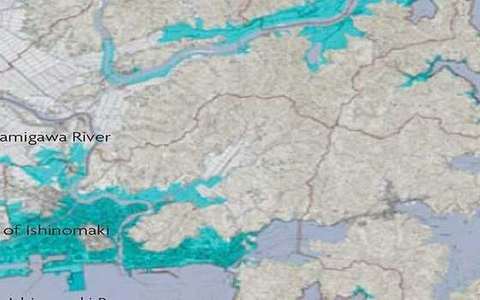 Tsunami in the tsunami lab — a TERMS crop, not the glossary plate and not the lab cover. Long-period wave from a sudden water displacement, often seafloor slip. Source: Wikimedia Commons / NASA / USGS / public domain.Wikimedia Commons / NASA / USGS / public domain
Shoaling
Wave slowing and growing as it enters shallow water.
 shoaling in the tsunami lab — a TERMS crop, not the glossary plate and not the lab cover. A TERMS crop, not the glossary plate and not the lab cover. Source: Wikimedia Commons / NASA / USGS / NOAA, public domain or CC.Wikimedia Commons / NASA / USGS / NOAA, public domain or CC
Storm surge
Sea-level rise from wind pile-up and low pressure. Not a tsunami.
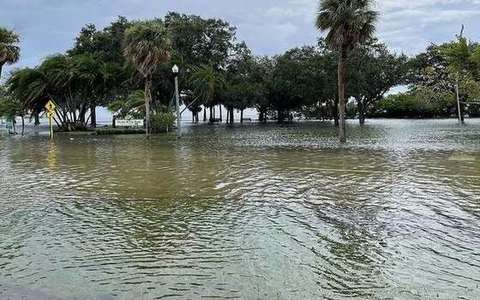 Storm surge in the tsunami lab — a TERMS crop, not the glossary plate and not the lab cover. Sea-level rise from wind pile-up and low pressure. Source: Wikimedia Commons / NASA / USGS / public domain.Wikimedia Commons / NASA / USGS / public domain
Megathrust
The big subduction fault. Cascadia’s tsunami source.
 megathrust in the tsunami lab — a TERMS crop, not the glossary plate and not the lab cover. A TERMS crop, not the glossary plate and not the lab cover. Source: Wikimedia Commons / NASA / USGS / NOAA, public domain or CC.Wikimedia Commons / NASA / USGS / NOAA, public domain or CC
Wavelength
Crest to crest. A tsunami’s is huge in deep water.
 wavelength in the tsunami lab — a TERMS crop, not the glossary plate and not the lab cover. A TERMS crop, not the glossary plate and not the lab cover. Source: Wikimedia Commons / NASA / USGS / NOAA, public domain or CC.Wikimedia Commons / NASA / USGS / NOAA, public domain or CC
Drawdown
Sea pulling back before some tsunami crests. Not a reliable gift of time.
 drawdown in the tsunami lab — a TERMS crop, not the glossary plate and not the lab cover. A TERMS crop, not the glossary plate and not the lab cover. Source: Wikimedia Commons / NASA / USGS / NOAA, public domain or CC.Wikimedia Commons / NASA / USGS / NOAA, public domain or CC
Run-up
How high the water reaches on land. Not the same as deep-water amplitude.
 run up in the tsunami lab — a TERMS crop, not the glossary plate and not the lab cover. A TERMS crop, not the glossary plate and not the lab cover. Source: Wikimedia Commons / NASA / USGS / NOAA, public domain or CC.Wikimedia Commons / NASA / USGS / NOAA, public domain or CC