Teachers
KS3 Earth and atmosphere · 15 minutes · no login
Why seasons happen
All teacher notes · Open the lab · 2131 words · ·
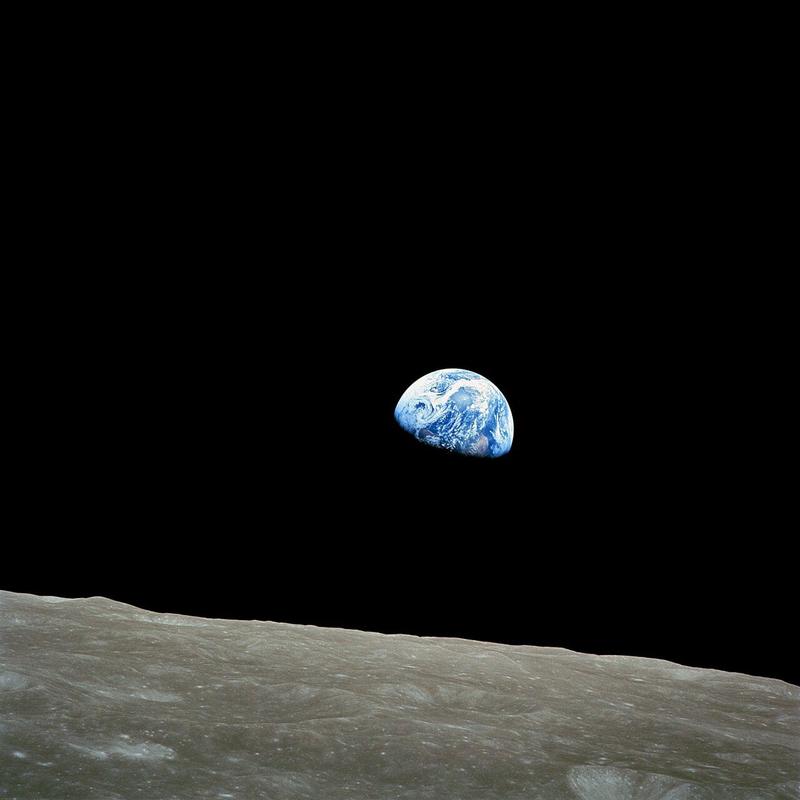
Why this lesson, and why the 3D
Why seasons happen is a fifteen-minute projector lesson, not a homework packet and not a film with a quiz bolted on. Put this hook on the board before you dim the lights: In December, London is dark by late afternoon while Sydney is in high summer. The Earth is not closer to the Sun in July. By the end of the slot a pupil should be able to explain seasons using axial tilt, not distance from the Sun, and predict which hemisphere is in summer on a given date. Curriculum tags in the header (KS3 Earth and atmosphere; GCSE background; NGSS MS-ESS1-1; APES 4.7 Solar radiation and Earth’s seasons) are filters, not a flag. The room is worldwide; SI first; International English. Ages on the card (KS3, GCSE, NGSS MS, APES) are a suggested band, not a gate.
Leeds in December is dark by late afternoon. Miami still has a high noon Sun. Same star, same calendar month. The difference is latitude on a 23.44° axis, not a closer orbit. UK horticulture, Scottish day length, and a Californian winter greenhouse all run on this geometry. Fieldwork in Snowdonia in June is long light; the same slope in December is a short, low Sun. Florida growers care about hours above a useful incidence angle — the same number UK glasshouses plot on a yield curve. A Lerwick December is shorter still. If a class blames July closeness, they will misread every OS day-length graph and every USGS insolation map they meet next.
The 3D is a named, inspectable object. Click the part, not a caption. If the model will not spin, the Why panel still carries the mechanism, the two photographs, and the film. Do not apologise for the model. Drive it. A silent spin teaches a screensaver. A named mesh that changes under a slider teaches the process.
Fifteen minutes on the projector
Projector on. Start at tilt 0° and play a year. Ask: does London’s day length change? It barely does. Snap tilt to 23.44°. Hide Sydney’s label. Scrub to the June solstice. Ask which city is in summer before you reveal. Then December. London dark, Sydney high sun. Point at perihelion in January. Distance is the trap. Turn eccentricity exaggeration on, then off, so the orbit looks almost circular again. Read London’s hours. Then Nairobi. Then Sydney. Space plays. Arrows scrub. P projector. L labels. Finish in Check. The wrong answer is always ‘closer in July’.
Open the lab full screen (F). Labels on (L). Speak the first step before you touch a slider: Play a year at 23.44°. Watch the terminator walk the globe and the marked cities. London and Sydney are never in the same season. Then the second: Set tilt to 0°. The terminator stops its seasonal walk. Then try 35° and scrub June versus December. Then the third: Tilt keeps the same orientation as Earth orbits. June: northern hemisphere leans toward the Sun. December: the opposite. Distance is the common misconception.
The sliders that earn their keep are Axial tilt (°); Orbit stretch. Space plays; arrows nudge time; R resets. Parameters the URL can remember: tilt, ecc. If you only have eight minutes, skip the last step and finish in Check. Projector layout (P) is for the back row: one idea, large type, the model still live.
Play a year at 23.44°. Watch the terminator walk. Pause on 21 June, then 21 December. Drag tilt to 0° and play again: the seasonal walk dies. Then 35° to see polar extremes grow. Toggle ‘Exaggerate distance’ so the orbit looks stretched, then turn it off: the real orbit is almost a circle. Keyboard: Space play, arrows scrub the year, L labels, R reset, P projector. City markers: London, Cairo, Nairobi, Sydney, Ushuaia. Ask which city is in summer before you reveal the label.
The in-site film is “Why we have seasons” (Khan Academy, about 8 min, Khan Academy on YouTube. CC BY-NC-SA. Educational embed, autoplay off.). Autoplay is off. Play one minute if you need a second voice; do not let the film eat the slot. The 3D still has to move under your hand.
What the third row will get wrong
You will hear the misconception before you have finished the first sentence. Write the false claim on the board and leave it there until the model has contradicted it. Do not skip this. A fluent pupil can recite the hook and still believe the false sentence.
“Summer happens because Earth is closer to the Sun.” — no. Seasons are a tilt effect. Earth is actually nearest the Sun in early January, during northern winter.
“The axis wobbles each year, pointing first north then south.” — no. Over one year the axis stays pointed the same way, near Polaris. The hemisphere that leans toward the Sun changes because Earth has moved around the orbit.
“The equator has no seasons, so the Sun is always overhead there.” — no. Equatorial day length stays near 12 hours, but noon altitude still shifts with declination. Overhead Sun only happens between the tropics, and not every day.
Pitfalls to keep in your pocket: Students treat the orbit drawing as highly elliptical. Keep the real orbit almost circular. Confusing Earth’s rotation (day) with revolution (year). Thinking the axis ‘wobbles’ each year. It stays pointed the same way (near Polaris) over one orbit. Do not let a pupil leave thinking the 3D is a photograph. It is a teaching model. Where vertical exaggeration exists, T collapses it and the caption says so. A labelled lie of scale is honest. An unlabelled one is a cartoon.
Two places, not a slogan
Earth’s spin axis keeps nearly the same direction as the planet goes around the Sun. June: the northern hemisphere leans toward the Sun, so London’s noon Sun is high and the day is long. December: the opposite. What moves: the planet’s place on the orbit, and which hemisphere is leaned toward the lamp. What does not: the axis’s aim, near Polaris, over one year. What is conserved: the 23.44° lean, and a nearly circular orbit. Distance to the Sun is the trap. Perihelion — nearest the Sun — falls in early January, during northern winter. If distance caused seasons, London and Sydney would share summer. They do not. The small extra insolation at perihelion is a few percent, a school figure, not a season. The terminator walks north and south because of tilt. Equatorial day length stays near 12 hours; London swings from about 8 to 16. The lie the model tells: orbit radius is shrunk so Earth is readable. Tilt is true. Eccentricity is a labelled switch.
The first place to land is UK seasonal day length. The second is Florida / California insolation. Same process, different rock or climate. If a pupil can only name one place, they have a postcard, not a mechanism. Atlas entries for those names are a click from the case list; send them back to the lab with one sentence they can say in Check.
Do not flatten the comparison into “this country versus that country.” Name the landform. Holderness is till, not chalk. Hawaii is a hotspot, not an island arc. Yosemite is a glacial trough, not a river canyon. The 3D is allowed to be schematic; the place names are not allowed to be sloppy.
Figures and the film
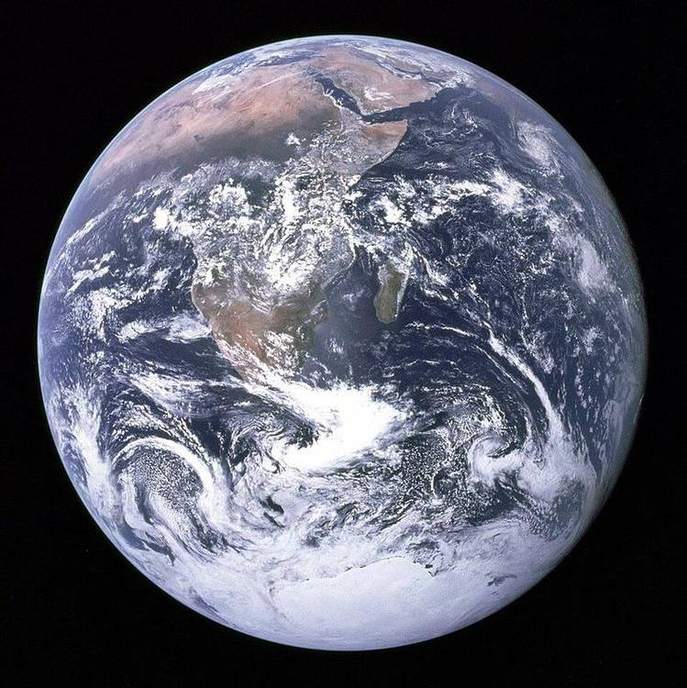
Field photograph: Apollo 17 Blue Marble: the whole sunlit Earth as a sphere, Africa and Arabia under cloud. A sphere, not a table of seasons. Axial tilt writes the calendar. Credit: NASA / Apollo 17 AS17-148-22727, public domain.
Mechanism photograph: Field or official figure for teaching Why seasons happen. A second photograph for the projector script — not the lab cover. Credit: Wikimedia Commons / NASA / USGS.
Two photographs, two jobs. The field picture is the place. The mechanism picture is the process. Do not run the lesson on a single Apollo Earth disc. A carbon-cycle class is a forest and a seam, not a blue marble. An ENSO class is a Pacific temperature map, not Africa from Apollo 17.
Words they must be able to say
Say these out loud once while you click the matching mesh. If a word has no mesh, it still has a photograph in Terms.
Axial tilt: The 23.44° lean of Earth’s spin axis relative to its orbit. The lean’s direction stays nearly fixed as Earth goes around the Sun. Exam language also accepts “Obliquity of the ecliptic”. Terminator: The moving line between day and night. In this lab it walks north and south through the year because of tilt. Solstice: When one hemisphere leans most toward the Sun (June, NH) or most away (December, NH). Equinox: When neither pole leans toward the Sun. Day and night are about equal everywhere. Declination: The latitude where the Sun is overhead at noon. It travels between 23.44°N and 23.44°S. Perihelion: Nearest point to the Sun. Early January. A few percent extra insolation, not the cause of seasons. Revolution: One trip around the Sun. About 365.25 days. Not the same as rotation (the daily spin).
Exam-language toggle (the Teacher tab) swaps UK/US pairs where they exist — levée/levee, arête/arete — so a mixed room is not punished for spelling.
Close the slot
The globe is to scale as a sphere. The orbit radius is not: if it were, Earth would be a speck. The Sun is drawn large enough to read from the back of the room. Tilt is true. Eccentricity is offered as a labelled lie so you can switch it off. Without the 3D view keep four sentences. A tilted axis. A nearly circular orbit. June is northern summer. December is southern summer. Perihelion is in January, so distance is not the season. London and Sydney never share summer. That is enough for Check on paper.
Finish in Check — ten questions, not a mood. The bank mixes definition, process, the misconception you just killed, a named place, and a read-the-model item (click the part; T). If a pupil can only recite the hook, they have not used the geometry. Wrong answers still show the one-line explain. Do not skip the explain.
Sources on the Teacher tab are the trail, not a bibliography to copy. NASA SVS — Earth’s seasons; NOAA Solar Calculator; Met Office — UK day length.
Link back to the live lab and keep the same slug. Do not invent a parallel worksheet that contradicts T, SI, or the named parts.
This note is worldwide. Curriculum tags (KS3 Earth and atmosphere; GCSE background; NGSS MS-ESS1-1; APES 4.7 Solar radiation and Earth’s seasons) are filters, not a flag. A class in Nairobi, London, or Shanghai can use the same 3D. Ages (KS3, GCSE, NGSS MS, APES) are a suggested band. If a sentence only works in one exam board, rewrite it before you project it.
Write these three lines on the board before you dim the lights. One: In December, London is dark by late afternoon while Sydney is in high summer. The Earth is not closer to the Sun in July. Two: the misconception “Summer happens because Earth is closer to the Sun.”. Three: the named parts they must click. Then drive the model. Check is ten questions covering definition, process, the misconception, a place, and a read-the-model item. Do not skip the explain on a wrong answer.
Board, units, and what not to say
SI first. Metres, kilometres, degrees Celsius, metres per second. A conversion in brackets is courtesy, not a second system. Do not let a pupil leave thinking the 3D is a photograph. It is a teaching model. Where vertical exaggeration exists, T collapses it and the caption says so.
Do not say “teaching mesh”, “sprinkle”, or “thin free surface not a fat pipe” out loud. Say the landform. Seasons are ~23.44° of axial tilt, not Earth–Sun distance. The outer core is liquid; S-waves do not pass. Yosemite is a glacial U-trough. San Andreas is a transform. Hawaiʻi and Yellowstone are hotspots. Florida is not a glacial trough.
If the room is noisy, projector layout (P) is the back-row setting: one idea, large type, the model still live. Full screen (F). Labels (L). Space plays. Arrows nudge time. R resets. The URL can remember tilt, ecc. Send them home with the same link; there is no login.
Leeds in December is dark by late afternoon. Miami still has a high noon Sun. Same star, same calendar month. The difference is latitude on a 23.44° axis, not a closer orbit. UK horticulture, Scottish day length, and a Californian winter greenhouse all run on this geometry. Fieldwork in Snowdonia in June is long light; the same slope in December is a short, low Sun. Florida growers care about hours above a useful incidence angle — the same number UK glasshouses plot on a yield curve. A Lerwick December is shorter still. If a class blames July closeness, they will misread every OS day-length graph and every USGS insolation map they meet next.
In-site film
Why we have seasons. Khan Academy. Khan Academy on YouTube. CC BY-NC-SA. Educational embed, autoplay off. Autoplay off.